
Name and Address:
Zhang Yingjun
College of Grassland Science and Technology, China Agricultural University, No. 2 Yuanmingyuan West Road, Haidian District, Beijing 100193, China
Phone and E-mail:
Phone: 13611272283
E-mail: zhangyj@cau.edu.cn
Brief background Information of Nominee including age, education and employment/profession associated etc.:
Professor Zhang Yingjun is born in 1971, a doctoral supervisor at China Agricultural University, Chief Scientist of the National Forage Industry Technology System, and Dean of the College of Grassland Science and Technology, China Agricultural University. He has long been engaged in grassland ecological restoration and forage production research, leading several national key projects including the Global Environment Facility (GEF) project. He holds multiple invention patents, has published over 100 papers in domestic and international journals, and has trained a large number of grassland science professionals. Combining theoretical research with engineering practice, he and his team developed the “In Situ Overseeding technology for degraded grasslands”, providing crucial scientific and technological support for grassland restoration and high-quality development of pastoral areas in China.
Challenges & Problems faced in Rangeland and Pastoralism in your area/region:
About 90% of China’s natural grasslands are degraded to varying degrees, leading to ecosystem dysfunction, reduced productivity, and loss of biodiversity. A huge gap in high-quality forage supply existed, to meet self-sufficiency targets for beef, mutton, and dairy, total demand exceeds 120 million tons, while current grassland production meets only 70%, leaving a shortfall of nearly 50 million tons. Three bottlenecks in traditional reseeding include unclear theoretical basis; high soil compaction preventing proper furrowing; poor seed-soil contact on complex terrain, resulting in low survival rates. Limited acceptance of new technologies among herders, and youth outmigration, leading to lack of long-term technical and human resources for grassland management.
Describe Role and Achievements in Rangeland management/restoration (detailed):
Professor Zhang Yingjun and his team have spent more than ten years systematically tackling the technical challenges of no-till reseeding in degraded grasslands, from theoretical innovation, process breakthroughs, equipment development, to demonstration and extension. The complete “In Situ Overseeding” technology system has been established. Detailed achievements are as follows:
1. Area of land involved and location:
The technology has been fully promoted in 8 provinces or autonomous regions: Inner Mongolia, Heilongjiang, Jilin, Hebei, Shaanxi, Gansu, Xinjiang, and Tibet, with a cumulative application area exceeding 60,000 hectares. Core demonstration areas established in Huitengxile Grassland and Meiguiying Town, Ulanqab, where grassland productivity increased by 1-2 times and hay yield reached over 3,000 kg/hm2. In Yuyang District, Yulin City, the In Situ Overseeding technology was used to improve wind-sandy grasslands. After successful restoration, grassland productivity reached 5,321 kg/hm², which is 5.58 times that of unimproved grassland. By implementing rotational grazing on the restored grassland for lamb fattening, each hectare of improved grassland can support more than 30 fattening lambs during the growing season. According to national planning, the area suitable for no-till reseeding restoration is 43.9316 million hectares, accounting for 12.60% of China’s total grassland area, indicating broad prospects for application and extension.
2. Number of livestock/animal population benefitted (wild and domesticated):
By increasing high-quality forage supply, the technology indirectly supports tens of millions of sheep units. In demonstration areas, each hectare yields an extra 1500-3000 kg of hay, supporting an additional 7.5-15 sheep units per hectare. Nationwide application is expected to add 120 million tons of forage, filling the existing high-quality forage gap and benefiting livestock across pastoral regions. Restored grasslands have improved vegetation cover and species diversity, providing better habitat for wildlife such as black-necked cranes, Mongolian gazelles, and corsac foxes.
3. Number of community members benefitted:
More than 200 herder households directly participated in technology demonstration. Through platforms such as the Hulunbuir Grassland Science and Technology Backyard and the Beijing–Inner Mongolia Cooperation Workstation, over 500 local technicians and herders have been trained. A “non-removable” local science and technology extension team has been cultivated, including more than 10 key personnel capable of independently leading provincial/municipal projects. The technology has reached millions of farmers and herders via media reports (People’s Daily, China Agricultural Network, Inner Mongolia TV, etc.).
4. Rules in management of resources (innovative practices):
Theoretical innovation: Proposed the “No-Till Reseeding Restoration Theory of Degraded Grassland”, which specifies that reseeded species should have neutral or positive plant-soil feedback, follows the “large gaps for grasses, small gaps for legumes” principle, and establishes a subclimax management model after reseeding.
Process innovation: Developed the “In Situ Overseeding” process. While preserving the original appearance of the native vegetation, the process establishes target species through a sequence of operations: deep slitting with disc openers → medium‑depth vertical slotting with ripple coulters → seedbed preparation using an inverted‑T seedbed preparator → pneumatic seed and fertilizer placement → narrow press wheel compaction. This creates an ideal seedbed structure, promoting seed germination and seedling establishment.
Equipment innovation: Developed the first in situ overseeding machine specifically for degraded grasslands in China, integrating slitting, furrowing, seedbed preparation, sowing/fertilizing, and soil covering/compaction. Equipped with an inverted “T” slot opener and independent contour-following structure, it operates precisely on high-compaction, complex terrain grasslands with excellent moisture retention.
Management rules: No utilization in the first year after reseeding; moderate grazing (stubble height 5-8 cm) or mowing (stubble height 8-10 cm) in the second year, combined with fertilization management, to maintain a subclimax state with high productivity and biodiversity.
5. Any policy changes brought/achieved:
In 2022, the National Chief Forage Scientist Expert Workstation was established in Ulanqab, integrating Beijing’s technical resources with local grassland restoration needs. In 2025, a cooperation agreement was signed between Ordos City and China Agricultural University to jointly build the Ordos Grassland Agriculture Experimental Station, focusing on three core technologies including In Situ Overseeding. The General Office of the Central Committee of the Jiu San Society sent a letter of thanks acknowledging the team’s contribution to the key research project on “Grassland Ecological Restoration and Productivity Recovery”. The GEF “Climate-Smart Grassland Management” project adopted this technology as a core demonstration, and the project’s outcomes provide experience for optimizing grassland eco-compensation mechanisms.
6. Any other impact:
1. Economic benefits: Compared with traditional no-till reseeding, the new technology reduces the seeding rate by 50%, increases the emergence and survival rates by 80%, doubles forage yield, achieves a hay yield of over 3,000 kg per hectare, and raises soil organic matter by more than 5%. When promoted nationwide, it is expected to generate an additional 120 million tons of forage annually, delivering enormous economic value.
2. Ecological benefits: Restored grassland vegetation cover reaches over 50%, effectively controlling wind erosion and enhancing grassland carbon sink function (grassland carbon pool accounts for 31% of China’s total natural ecosystem carbon pool).
3. Academic impact: Published a key paper “Theory and practice of no-till reseeding restoration for degraded grassland vegetation” in Chinese Science Bulletin, systematically elaborating the theoretical and technical framework, widely cited.
4. Social impact: Herder Ma Sanzhibu from Qinghai said: “In the no-till reseeding area, several high-quality forages were sown in spring without damaging the grassland. The grass grows more and thrives!”. Herders affectionately call Professor Zhang “the scientist of the grasslands”. The technology has been reported many times by People’s Daily, China Agricultural Network, and other media.
7. Please mention feedback from community members/public:
(1)Ma Sanzhibu, a herdsman from Qilian County, Qinghai Province: “In the no-till reseeding area of this project, without damaging the grassland, several high-quality forage grasses such as Elymus nutans, Festuca sinensis (Qinghai type), and Poa pratensis (Qinghai type) were sown in spring. This way, the grass grows more abundantly and vigorously!”.
(2) A local herder in Ulanqab, looking at the restored grassland, said: “Arid degraded grassland that would have taken 10-20 years to recover can now revive in just 2-3 years, thanks to the ‘technological code’ brought by the Beijing research team”.
(3)Professor Zhang often says: “We not only need to restore the grasslands, but also enable herders to live a better life. The ultimate goal of grassland management is to achieve ecological well-being and high-level utilization of grasslands, allowing herders to sustainably benefit from the ecological industry circle”.
8. What are the future plans or opportunities for strengthening your work on rangeland restoration and pastoralism:
Continue to deepen the “government-industry-university-research-application” collaborative innovation model. Build upon the established Hulunbuir Grassland Science and Technology Backyard and the Beijing–Inner Mongolia Cooperation Workstation as technology integration and demonstration platforms to continuously expand the application of the In Situ Overseeding technology in broader degraded grassland areas. Align with the national “carbon peak and carbon neutrality” goals, further study on grassland carbon sink functions will be conducted to optimize the In Situ Overseeding technology for higher carbon sink increments. Promote the Chinese In Situ Overseeding solution to countries along the “Belt and Road”, contributing China’s wisdom to global grassland ecological restoration.
9. Please add 4-5 pictures and one video clip (2-3 minutes) of your activities:
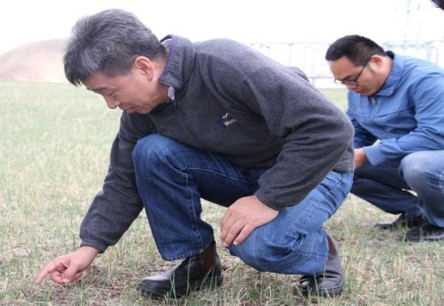
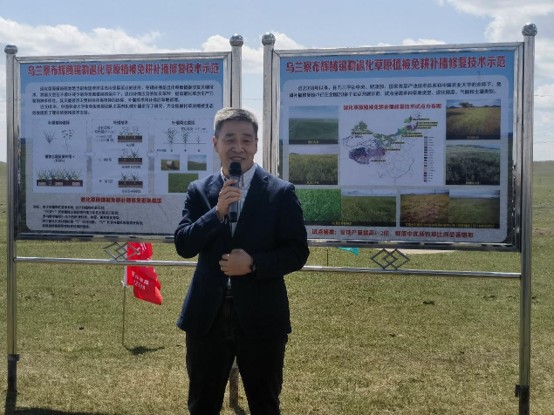
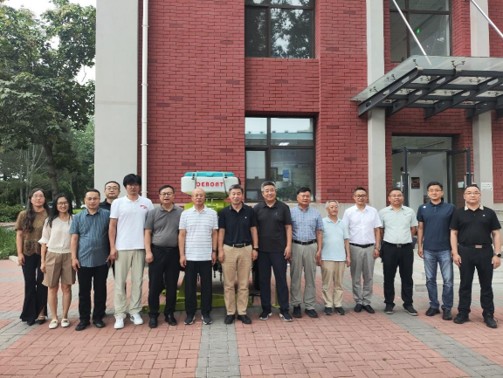
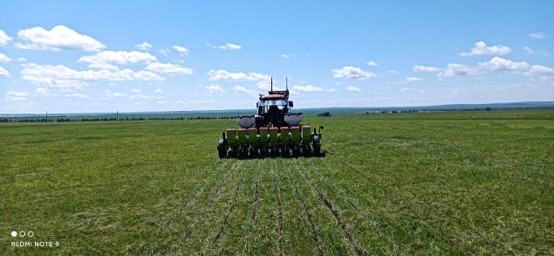
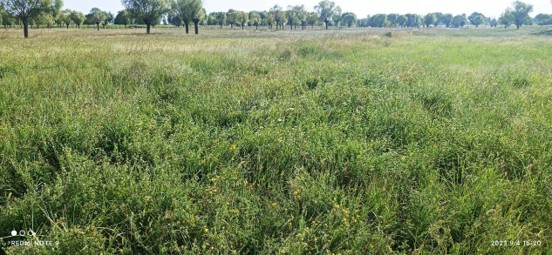
Video: Demonstration of Managed Intensive Grazing (MIG) model (see Annex 1)
10. Reference of two known persons/leaders/Government officials who are familiar about your work and achievements:
Huang Ding, Professor at China Agricultural University;
Yang Gaowen, Professor at China Agricultural University