Name and Address:
Tungalag tamiriin khuvuu-Primary herder association
Arkhangai province, Bulgan county,Tusgalt bagh, Mongolia
Phone and E-mail:
Email: b.ulziibayar0318@gmail.com
Brief background Information of Nominee including age, education and employment/profession associated etc.:
Tungalag Tamiriin Khuvuu Primary Herder Association NGO was formed in 2015 and officially registered in 2025 in accordance with the laws and regulations of Mongolia. Relevant registration certificates and bylaws are attached. The organization consists of six environmental conservation community groups with a total membership of 103 herders. Its governance structure is participatory, with a leadership system composed of six representatives elected from each community group. From among these representatives, a Chairperson of the Board is elected to oversee and manage the organization’s day-to-day operations.
The organization holds a general assembly of all members twice a year to discuss and approve strategies, operational plans, and reports, following a collective decision-making approach. Each representative is responsible for coordinating with 10–20 herder households, ensuring member participation, disseminating information, and implementing activities at the local level.
The organization’s daily operations are supported by staff responsible for executive coordination, finance, and reporting, while adhering to principles of transparency and accountability. Financial activities are implemented in accordance with relevant laws and regulations, and audit reports will be attached where available.
The leader of the Primary Herder Association is Ulziibayar, a young herder who has lived in the area his entire life. He actively leads the organization’s efforts in rangeland management, wildlife conservation, and strengthening community-based natural resource management initiatives.
Challenges & Problems faced in Rangeland and Pastoralism in your area/region:
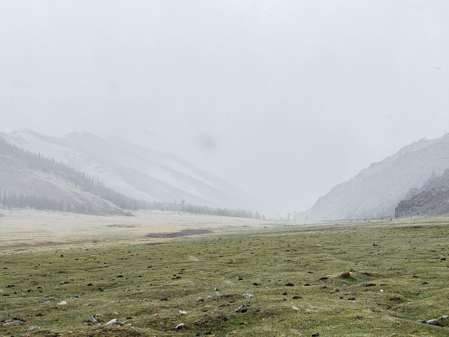
The main challenges faced in our area are increasing rangeland degradation and high livestock density. Over the past years, climate change, recurrent droughts, and harsh winter disasters (dzud) have reduced pasture productivity and vegetation cover. At the same time, the growing number of livestock has increased grazing pressure on rangelands, leading to overgrazing, soil degradation, and loss of biodiversity. Water sources and seasonal pasture areas are also becoming increasingly stressed.
Pastoralist households are facing difficulties in maintaining sustainable pasture use while securing their livelihoods. Young herders are increasingly vulnerable to economic and environmental challenges, and traditional pasture management systems are under pressure. Wildlife habitats are also being affected due to pasture degradation and competition for natural resources. These challenges highlight the urgent need for community-based rangeland management, improved pasture planning, livestock quality improvement, and stronger adaptation strategies to climate change.
Role and Achievements in Rangeland management/ restoration:
The community has achieved significant progress in sustainable rangeland management and restoration through community-based governance and practical actions. Community members developed and implemented rangeland use agreements and local rangeland use regulations, which guide seasonal pasture use, grazing management, and collective responsibilities. Herders actively follow these regulations to reduce overgrazing and improve rangeland health.
The community also implements the Responsible Nomads Code of Practice, promoting sustainable livestock production, environmental stewardship, animal welfare, and traceability systems. Through this initiative, herder households are linked with premium markets and are able to sell certified products at higher prices.
Each herder household has signed agreements based on herd structure and sustainable pasture capacity, with a collective commitment to reduce livestock numbers by 5 percent over the next five years in order to improve rangeland sustainability and livestock quality rather than quantity.
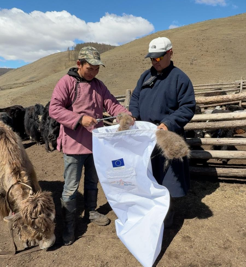
The organization has also supported herders in adding value to dairy products, strengthening community-based meat supply systems, and establishing market linkages with meat buyers and yak down buyers. These efforts have improved household income opportunities while encouraging sustainable pasture management and responsible livestock production.
Area of Land Involved and location: About 350,000 ha area
No. of livestock/ animal population benefitted Both wild and domesticated: 3862 head of livestock
Number of community members benefitted: 103 herder household
Any policy changes brought/achieved:
The community has contributed to strengthening local pasture management governance through the development and implementation of community-based rangeland use agreements and rangeland management regulations. These agreements have improved cooperation among herder households and encouraged more sustainable and responsible pasture use practices.
Through the implementation of the Responsible Nomads Code of Practice, the community has also promoted sustainable livestock production, traceability systems, and environmentally responsible herding practices. These efforts have encouraged herders to shift from livestock quantity toward livestock quality and value-added production.
As part of the community agreements, herder households collectively committed to reducing livestock numbers by 5 percent over the next five years based on pasture carrying capacity and herd structure planning. This represents an important local-level policy and behavioral change toward sustainable rangeland management and climate adaptation.
Any other impact:
The initiative has created several additional positive impacts within the community. Community cooperation and collective responsibility for natural resource management have been significantly strengthened. Local herders are actively participating in forest and wildlife protection activities, helping to reduce environmental degradation and improve ecosystem conservation.
The initiative has also supported youth herders by encouraging their participation in sustainable herding practices, community leadership, and value-added livestock production. Women herders have been actively engaged in dairy processing, community organizations, and household income-generating activities, increasing their participation in local decision-making and economic opportunities.
Overall, the activities have strengthened community unity, improved awareness of sustainable rangeland management, and enhanced the resilience of pastoralist households to environmental and economic challenges.
Who are all different stakeholders Involved in this process and what recognition have been given already through awards, incentive etc.:
Different stakeholders have been involved in this process, including local herder communities, community leaders, youth and women herder groups, local government authorities, environmental and agricultural organizations, private sector buyers, and development partners working on sustainable rangeland management and pastoral livelihoods.
The community has collaborated with meat companies and yak down buyers to strengthen traceability systems and improve market access for sustainably produced livestock products. Through the Responsible Nomads Code of Practice, herders have been connected to premium markets and incentive-based value chains that reward sustainable production practices.
The organization and its member communities have also received recognition and support through participation in sustainable rangeland management initiatives, community-based conservation activities, and responsible livestock production programs. These collaborations have increased community visibility, strengthened local governance, and encouraged long-term environmental stewardship and livelihood improvement.
What are the future plans or opportunities for strengthening your work on rangeland restoration and pastoralism:
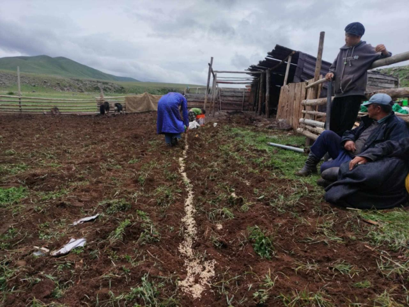
The community plans to further strengthen sustainable rangeland restoration and pastoral livelihoods through expanding community-based pasture management and improving climate-resilient livestock practices. Future priorities include continuing the implementation of rangeland use agreements, reducing grazing pressure through improved herd management, and restoring degraded pasture areas through collective community action.
As the community is located in the Khangai region, where forest ecosystems are an important part of local livelihoods and biodiversity, protecting forests and reducing pressure on forest resources are major priorities. One important future activity is reducing the use of animal dung as household fuel by developing community-based animal dung drying and processing activities and supplying alternative fuel products to nearby soums. This initiative will help reduce forest degradation and improve environmental sustainability.
The organization also plans to introduce animal-friendly and nomadic-friendly technologies, including yak milking machines and improved livestock management technologies that are suitable for mobile pastoral systems. These innovations aim to improve labor efficiency, product quality, animal welfare, and household income.
In addition, the community plans to strengthen livestock breeding systems to improve productivity, animal quality, and animal health. Disease testing and monitoring activities have already started, and the organization plans to expand disease prevention and control measures in collaboration with veterinary and animal health professionals.
The organization will continue strengthening the Responsible Nomads Code of Practice by expanding traceability systems and increasing access to premium markets for sustainably produced meat, dairy products, and yak down. Supporting youth and women herders, increasing value-added dairy processing, and strengthening biodiversity and wildlife conservation will remain key priorities for the future.
Photos:

Reference of two known person/ leaders and Govt:
1. Ulziibayar
Phone: 95952990, 80718671
Email: b.ulziibayar0318@gmail.com
2. Ankhabayar
Phone: 99999253
Email: ankhbayar@greengoldmrrc.com