Name and Address:
Ms. Kali Devi Balai
Charagaha Vikas samiti Laxmipura, Gram panchayat -Rajgarh ,Block – Mandalgarh
Phone and E-mail:
Phone: 9660540905
Background Information of person / organization:
Kali Devi balai is women leader and women supervisor in MGNREGA with 40 year of age and studied 10th.
She is women farmer belonging to agro pastoral community.
Challenges & Problems faced in Rangeland and Pastoralism:
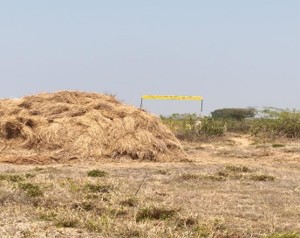
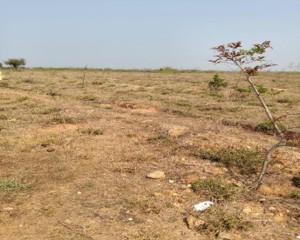
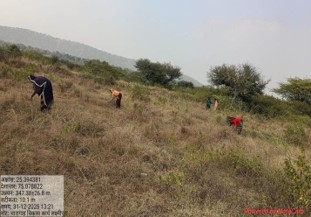
Commons such as pasturelands are central to rural livelihoods in semi-arid India, supporting livestock-based production systems. However, these resources have been subject to degradation due to over grazing and weak governance processes. While much of the discourse on commons focuses on institutions and policies, less attention is paid to the gendered nature of resource governance. Women, despite being primary users of commons , are often excluded from formal decision-making spaces. Prior to intervention, the village faced acute fodder scarcity due to degraded pasturelands. As one villager recalled, “We used to travel far with our animals just to find fodder, and this commons (Kaker) seemed like dead land with nothing growing on it.”Such conditions heightened vulnerability, particularly for women, who bore the primary responsibility for livestock management and household sustenance.
Role and Achievements in Rangeland management and related development:
In 2017, the village formed the Charagah Vikas Samiti, Laxmipura village institution under Section 170(1) of the Rajasthan Panchayati Raj Act. The institution developed a plan to restore 25 hectares of grazing land through MGNREGA-supported interventions. However no formal institutions is formed and visible outcomes were seen on ground . Laxmipura village, which comprises around 106 households primarily dependent on rainfed agriculture and livestock rearing with livestock population of around 1700 small and big ruminant (800 -1000 Goat, 200 buffalo, 500 cow ).
In Laxmipura, the missing element in restoration process is involvement of women who constituted a major share of the workforce under MGNREGA – government scheme and everyday engagement with livestock and fodder needs. The turning point in Laxmipura emerged not from an informal meetings at MGNREGA work site which make them realise of taking collective action . After long hours of work under MGNREGA, they continued to bear the burden of fodder collection. As Arami Devi Gujjar expressed, “After working under MGNREGA, all our time goes into collecting fodder for animals—what is the purpose of this pastureland then?” Women, at the worksite itself, decided to actively participated in protecting and regenerating pasturelands. This marked a shift from participation to ownership.
As Bhuri Devi Gujjar explained, “We are the ones who stop our animals from entering the charagah, and there is strict ‘kuldibandi’ (Fencing?) in the pastureland.”
This reflects women’s direct engagement in regulating access to commons—an often overlooked but critical aspect of governance.
Although formal rules were established by the village institution, their enforcement depended heavily on informal mechanisms which is discussion at households. Women played a central role in ensuring this by influencing behaviour shift at the household level.
Kali Devi Balai noted, “Rules are followed because women ensure it at home.”
This highlights how governance of commons extends beyond formal institutions into everyday social practices, where women act as key regulators. Their role in convincing household members and regulating follow up at household level was critical in this. This phase marked a shift from passive institutional governance to active community-led stewardship at household level. Through consistent efforts over a period of four months, women enforced strong protection mechanisms, leading to rapid ecological recovery.
The Laxmipura case highlights that commons governance cannot be understood solely through formal institutions. While the Charagah Vikas Samiti provided a framework, it was women’s everyday practices of care, regulation, and enforcement that translated plans into tangible outcomes.
This case underscores three critical insights:
- Governance is sustained through informal mechanisms embedded in households
- Women play a central role in enforcing norms and ensuring compliance
- Collective action driven by lived experiences can transform resource management
Recognizing women as “invisible stewards” challenges conventional narratives that position them merely as labourers or beneficiaries.
The story of Laxmipura is, therefore, not just about ecological recovery but it is about redefining governance by recognising the invisible stewards who sustain it. Women, as this case shows, are central to this process. Their role in regenerating ,regulating , enforcing is fundamental to the success of commons restoration. Yet, these contributions remain largely unrecognised.
Making women visible within commons governance is not merely a matter of acknowledgment—it is essential for designing effective and equitable policy interventions. As neighbouring villages begin to replicate Laxmipura’s model, the need to institutionalise such recognition becomes even more critical. Women’s contributions to commons governance are foundational yet under-recognized. Programmes like MGNREGA must move beyond viewing women as labourers to acknowledging them as stewards and decision-makers.
Impact and Feedback:
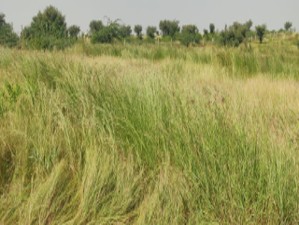
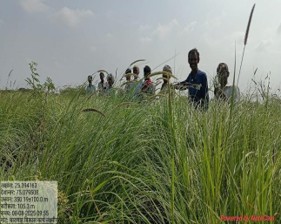
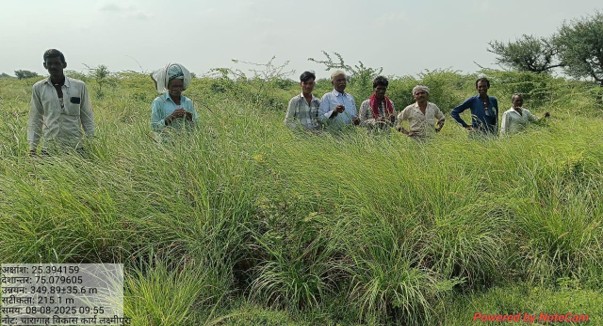
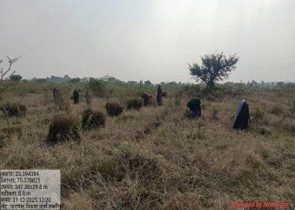
The outcomes of this women-led governance were visible as the pastureland produced grass (local name of grass ?) up to six feet in height, signaling a significant ecological shift.
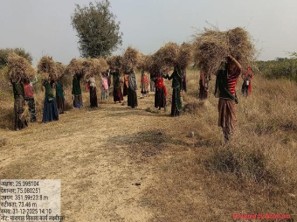
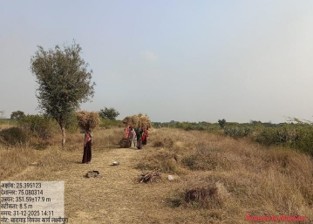
The village harvested approximately 25,500 bundles of grass, marking a transition from scarcity to abundance. Each household was allowed to harvest according to its livestock needs, ensuring equitable access. The benefits extended beyond Laxmipura, neighbouring villages such as Jal ka Kheda, Gothra, Pitalpura, and Thalkhurd approached the village institution seeking access to fodder. Laxmipura agreed, but with a condition to contribute 50% of the harvested grass for stray animals.
At the same time the village institution had accompanied a shift in management practices—from traditional open grazing, to a regulated cut-and-carry system. This transition reflects not only ecological change but also a transformation in collective norms and practices. Approximately 6,000–7,000 bundles were set aside for stray animals , demonstrating an ethic of care that extended beyond immediate economic gains.
The ripple effects of this transformation are evident, with neighbouring villages seeking to replicate similar models through MGNREGA and institutional strengthening.
As this case demonstrates, sustainable commons governance is not merely about restoring land—it is about recognizing and strengthening the invisible hands that sustain it.
What are the future plans or opportunities for strengthening your work on rangeland restoration and pastoralism:
The village institution illustrates how community-governed pastureland restoration can revitalise rainfed agriculture in semi-arid regions. The institution is planning for further leveraging public funds like MGNREGA, strong village institutions, and locally rooted ecological knowledge, for restoring commons in whole gram panchyat as the biotic pressure is much higher in the landscape and will be recovered only if the communities in larger landscape regenerated their commons for securing livelihoods and ecological resilience. This case reinforces that revitalising rainfed agriculture requires placing commons, community governance, and ecological regeneration at the centre of rural development strategies and need to be taken at landscape level .
Photos: