
Name and Address:
Loupa Pius
Komuria West, Kaabong Town Council, Kaabong District – Karamoja region, Uganda
Phone and E-mail:
Phone: +256784616870
Email: Piusloupa89@gmail.com
Brief background Information of Nominee including age, education and employment/profession associated etc.:
Pius LOUPA is a 37-year-old conservation and community development practitioner with an MSc in Environmental and Natural Resources Management from Gulu University and a Bachelor of Science in Agriculture from Uganda Martyrs University. He is the Coordinator of Rangelands Community Initiative Africa, based in the Karamoja pastoralist region of Uganda. Loupa also serves as Co-Chair of the International Year of Rangelands and Pastoralists (IYRP) Eastern and Southern Africa Regional Support Group and is a member of the IPBES Indigenous and Local Knowledge Task Force. In addition, he is an alumnus of the Chuck Wall Conservation Policy Fellowship in Africa.
Challenges & Problems faced in Rangeland and Pastoralism in your area/region:
The Karamoja sub-region is home to approximately 1.2 million people, the majority of whom depend on land and livestock for their livelihoods. However, nearly 54% of the land is under protected areas or mineral exploration concessions, limiting community access to grazing and livelihood resources.
Rangelands in the region are increasingly facing degradation due to uncontrolled fires, mining and extractive activities, climate change, and the expansion of intensive monoculture agriculture. These practices damage rangeland ecosystems, expose soils to erosion, and reduce the availability of grazing land for livestock. In Moroto and Kaabong, mining chemicals contaminate water sources and soils, causing health risks to both people and animals.
Pastoralist communities also face conflicts over limited natural resources, for example restrictive conservation policies in Kidepo and Pian Upe Conservation Area have entered into conflicts with pastoralists during mobility hence limit access to land, weak and underdeveloped markets infrastructure, recurring droughts and livestock diseases especially foot and mouth disease has devastated livestock, and inadequate participation in decision-making processes affecting their livelihoods and territories such as dialogues for land transformation and land policy review has not taken in aspirations of pastoral peoples.
Describe Role and Achievements in Rangeland management/ restoration:
The narrative shall include local name and type of pastureland/grassland and its legal status, Area of Land Involved and location, Number of livestock/ animal population benefitted both wild and domesticated, Number of community members benefitted, rules in management of resources , Any policy changes brought/achieved, Any other impact.
The pasture seed model initiatives in Kaabong and Kotido districts, particularly in Loyoro and Sidok sub-counties focused on strengthening agro-pastoral resilience in Karamoja, where communities depend heavily on livestock but face frequent droughts, pasture shortages, and land degradation.
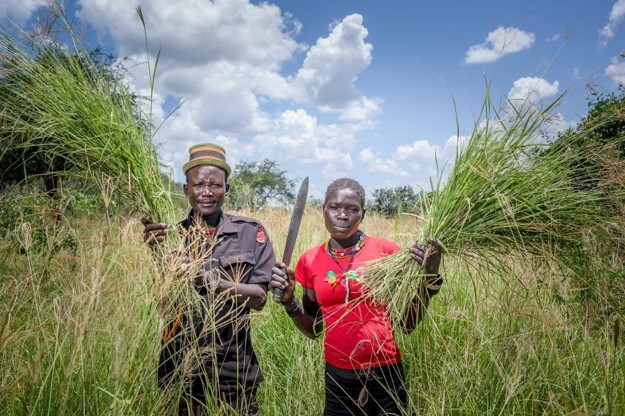
To respond to these challenges, the initiative promoted the cultivation of drought-tolerant pasture seed varieties such as Chloris gayana, Cenchrus ciliaris, and Rhodes grass. These varieties were introduced through a pasture seed model, where five pastoral groups with 1800 individuals’ members were supported to establish pasture plots. The grasses are fast-growing, drought-resistant, and suitable for local conditions. This helps ensure continuous forage availability, supporting 12,000 livestock (Cattle, goats, sheep and donkey) especially during the dry season, and reduces pressure on communal rangelands.
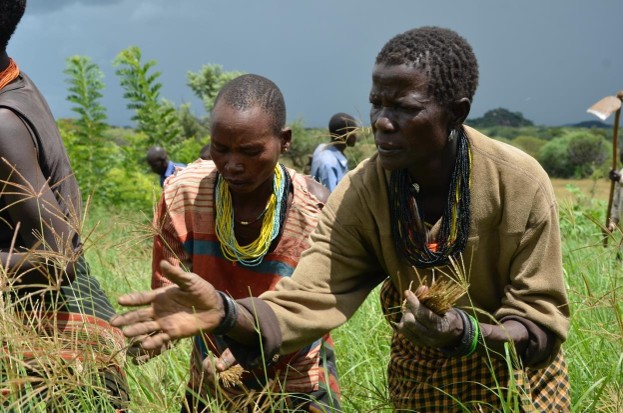
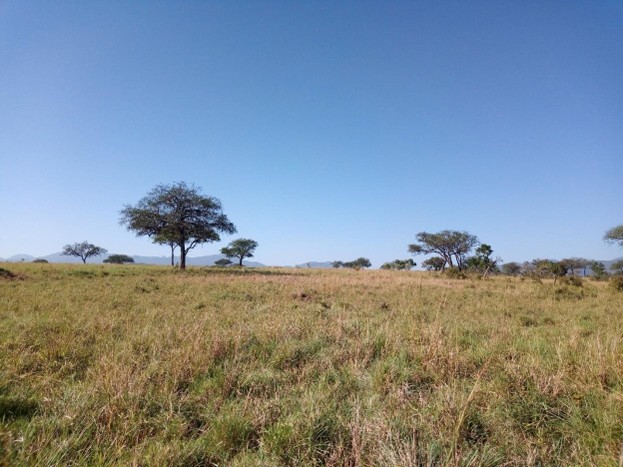
Through this work, 160 pastoralists community agents were trained in pasture establishment, harvesting, storage, and hay making. This improved livestock productivity, especially milk and meat production, which directly contributes to household food and nutrition security. We also carried out reseeding of degraded rangelands by distributing pasture seeds, especially Chloris gayana, to shepherds that help distribute seeds to communal rangelands. Hencing recovering 2300 hectares of land after long grazing periods. This supported the restoration of 100 hectares of degraded grazing areas and improved pasture availability over time.
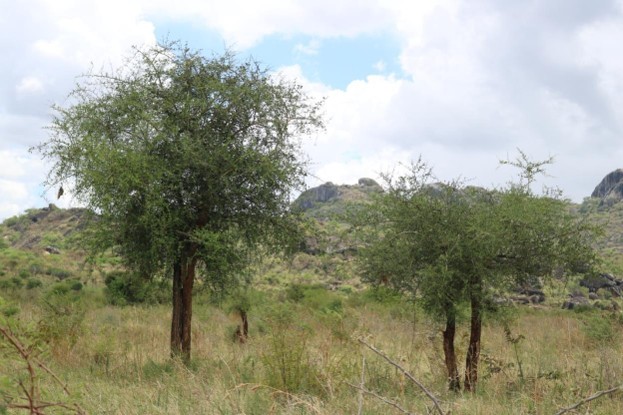
We also supported regeneration of trees on abandoned agricultural fields of Kalapata and Lobongia. This included promoting farming with trees (indigenous agroforestry), which helped restore soil fertility, provides shade for livestock, and contributes to environmental conservation.
Another important component of the work was land rights education. Pastoral communities were supported to better understand their land and resource rights, which is critical in managing rangelands sustainably and reducing conflicts over grazing areas.
To improve grazing management, we facilitated the production of dry season and wet season grazing maps for Karamojong pastoralists. These maps help communities plan livestock movement, avoid overgrazing, and use available pasture resources more efficiently throughout the year.
We also established pasture demonstration gardens across five sub-counties in Kaabong and Kotido. These serve as learning sites where pastoralists can see practical results and share knowledge. Currently, there are active pasture-growing groups continuing this work. The efforts are ongoing to scale up pasture production through community pasture seed banks. These seed banks will ensure that pastoralists can access quality seeds locally and sustain pasture production without relying on external support. They will also act as centers for knowledge sharing and community planning.
Feedback from community members/public:
The group has earned income from selling pasture seeds, and they have also started a Village Savings and Loans Association (VSLA). This has helped members support their households, including paying school fees for their children.
Last year, Karamoja experienced increased conflict, including cattle rustling and insecurity along the Turkana border. Because of this, many households were forced to keep their calves at home for safety. This happened during the dry season, when pasture was already scarce. As a group, we responded by dividing the pasture garden among ourselves. This allowed each member to access pasture and feed their calves during this difficult period. The pasture we had established helped us sustain the animals until the rains started. Lochoch Lokwi, Group Leader, Panyangara Pasture Growers
What are the future plans or opportunities for strengthening your work on rangeland restoration and pastoralism:
There are opportunities to strengthen and scale our work on rangeland restoration and pastoralism in Karamoja we aim to.
- For example, we plan to expand pasture seed production and establish more community pasture seed banks. This will ensure that pastoralists can access quality seeds locally and sustain pasture production without relying on external support. Scaling the pasture seed model to more sub-counties will increase pasture and seed availability and reduce pressure on degraded rangelands especially during dry seasons.
- Strengthen shepherds of the grasslands on rangeland restoration efforts through reseeding of degraded areas and promoting Farmer-Managed Natural Regeneration (FMNR) on agricultural fields. This will support the recovery of grasses and trees, improve soil health, and restore ecosystem functions that are critical for pastoral livelihoods.
- Promote integrated agro-pastoral systems such as farming with trees (agroforestry). Expanding tree regeneration in areas like Kalapata and Lobongia will improve access to fodder, and restoring soil fertility while also supporting climate adaptation.
- Improve grazing management through wider use of seasonal grazing maps. By supporting more communities to develop and use dry season and wet season grazing plans, pastoralists can better manage livestock movement, reduce conflicts, and avoid overgrazing.
- Strengthen customary land governance and community awareness on land rights. Supporting pastoralists to understand and secure their land and grazing rights is essential for sustainable rangeland management and long-term investment in restoration.
Photos and video:
Video: https://www.youtube.com/watch?v=Hsdh2DufPe4
Reference of two known person/ leaders / Government. officials who are familiar about your work and achievements:
- Dr Denis Maholo – Assistant Commissioner Animal nutrition and rangelands management, Ministry of Agriculture, Animal Industry and Fisheries (MAAIF Uganda)
- Olinga Stephen – Rangelands ecologists – National Agricultural Research Organisation