Name and Address:
Dr. Pushpendra Rana, Indian Forest Service
Talland, Shimla, Himachal Pradesh, India, 171001
Phone and E-mail:
Phone: +918368537080
Email: pranaifs27@gmail.com
Background Information of person / organization:
Age: 52
Education: PhD
Employment/Profession: Government Officer (Indian Forest Service)
Challenges & Problems faced in Rangeland and Pastoralism:
Five Decades of Policy Stasis and the Resulting Data Vacuum:
For over 55 years, the management of Himachal Pradesh’s pastures was trapped in a state of policy stasis, governed by a regulatory framework that had long since lost its connection to ground reality. In 1970, following the recommendations of a Grazing Advisory Committee, the state government imposed a blanket freeze on the number of grazing permits and livestock allowed in forest areas. While intended as a temporary measure until a scientific assessment of carrying capacity could be performed, that study was never conducted. This created a profound policy-reality gap, where the Forest Department was forced to manage a dynamic ecosystem using static, fifty-year-old data. This administrative deadlock left field staff and pastoralist communities in a state of constant legal and operational uncertainty.
The Ecological Failure of Exclusionary Conservation:
A fundamental hurdle was the long-standing management belief that viewed livestock grazing as inherently destructive to mountain ecosystems. This belief led to a strategy of protection by exclusion where herders were systematically barred from traditional meadows to allow the land to recover. However, 20 years of grazing bans in high-altitude areas like the Great Himalayan National Park (GHNPCA) proved that this exclusion was actually counter-productive. Without controlled grazing to maintain the landscape, natural grasslands were overtaken by unpalatable woody vegetation, causing a 10.65% increase in the density of the said woody vegetations. Most crucially, scientific soil analysis revealed that grazed pastures sequestered 39.27 tC/ha more stable soil carbon i.e. Mineral-Associated Organic Matter (MAOC) than those where grazing was banned. The legacy policy of exclusion was inadvertently damaging the very biodiversity and carbon sinks it sought to protect.
Technical Malpractice in Afforesting Natural “Dhars”:
In a drive to meet national tree-planting targets, the department historically treated natural alpine grasslands and “dhars” as empty wastelands that needed to be covered in forest. This was a fundamental technical and silvicultural error. These landscapes are unique, natural grassland ecosystems, not degraded forests. Forcing tree growth in these fragile high-altitude areas damaged the soil structure and destroyed the native grasses essential to the migration-based economy. Field inspections in districts like Chamba in Himachal Pradesh documented that these plantations were not only failing to survive but were also disrupting local water sources and the natural ecological balance of the alpine landscape.
Socio-Administrative Inequity and the Crisis of Absentee Rights:
The fossilization of the 1970 permit system created a deep-seated crisis of administrative unfairness. Because no new permits could be issued, the system rewarded absentee permit holders, individuals who retained legal grazing rights on paper despite no longer owning animals or practicing herding. Simultaneously, the active, dependent pastoralists who manage their herds on the ground were denied legal recognition or updated permits. This structural inequity stifled the economic potential of the sector and fostered a profound trust deficit between the herder communities and the forest administration, making effective field management nearly impossible.
Physical Fragmentation of Migratory Routes and Thaches:
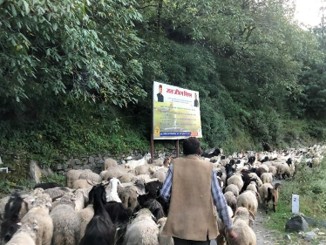
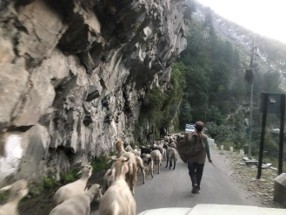
The survival of the migratory system was threatened by the total lack of spatial recognition for ancient transit corridors. Traditional migration paths and “thaches” (halting places) were never officially mapped, leading to the construction of fences and infrastructure directly across ancient routes. This fragmentation forced herders into hazardous detours, increased livestock mortality, and caused constant conflict with field staff. Without a corridor-based approach, the mobility essential to Himalayan pastoralism was systematically dismantled.
Role and Achievements in Rangeland management and related development:
Led the Transition to a Resilience-Based Adaptive Grazing Framework:
Spearheaded the first fundamental update to Himachal Pradesh’s grazing rules since 1970, targeting the policy deadlock that had frozen the permit system for five decades, and moved the state management model away from fixed animal caps. By preparing the fundamental framework for the upcoming Cabinet amendment, secured high-level political and administrative support for permit rationalization, a process that replaces outdated historical records with permits based on actual ground-level livestock counts. This work provided the essential foundation for upcoming legislative amendments that will finally ensure that legal grazing rights are updated to match actual livestock counts. These actions have provided the legal foundation for drastic reforms that prioritize the security and tenure of active herders.
Secured Spatial Sovereignty and Legal Recognition for Migratory Routes:
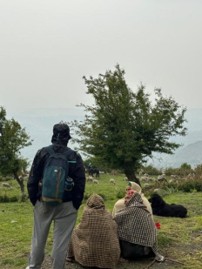
Identified and mapped ancient transit corridors and thaches (halting places) to protect them from physical fragmentation and encroachment. In a decisive shift in departmental practice, issued formal instructions to forest staff to strictly prohibit tree planting and fencing on recognized migratory routes and watering points. By partnering with the Centre for Pastoralism to execute GPS-based cartographic mapping, converted customary community knowledge into a digital, legally recognized database. This intervention has effectively stopped the fragmentation of migratory landscapes by departmental plantations and secured the Right of Way for thousands of Gaddi and Gujjar families.
Championed Science-Led Restoration and Carbon Sequestration:
Brought contemporary ecological science into daily forest operations by leading long-term research with the National Centre for Biological Studies (NCBS). This scholarly work produced the empirical evidence needed to prove that exclusionary conservation is counter-productive; the research showed that stopping grazing leads to harmful woody encroachment and a loss of stable soil carbon. Translated these findings into a technical framework that redirected the department away from ecologically unsound afforestation in alpine dhars. By showing that restoration fails when local grazing is disrupted, shifted the focus toward maintaining open, productive grasslands that sequester 39.27 tC/ha more stable carbon than ungrazed sites.
Mobilized Grassroots Support and International Partnerships:
Acted as the primary link between the state government and grassroots organizations like the Himachal Ghumantu Pashupalak Mahasabha. By elevating the practical challenges of graziers to the highest levels of policy, ensured that pastoralist communities are treated as active partners in conservation. Simultaneously, secured international recognition by directing the technical development of World Bank and Japan Social Development Fund (JSDF) grant proposals. This effort has successfully positioned the state to secure a USD 2.75 million grant currently in the Project Placement Report (PPR) pipeline, aimed at building indigenous wool and meat value chains to ensure pasture management is backed by real economic resilience for nomadic tribes.
Professionalized Field Standards and Community Co-Management:
Redefined the technical and silvicultural standards for field-level work to ensure natural pastures are respected and protected. As evidenced in the Chamba Forest Circle mandates, ended the planting of exotic species in natural grazing lands and redirected resources toward minimal-intervention restoration, such as the creation of water ponds and contour trenches. Established a new rule for participatory governance, making it mandatory for field staff to consult with local herder collectives before any intervention in alpine meadows. By introducing an Adaptive Resilience assessment model, retrained forest officers to focus on forage productivity, successfully bridging the long-standing trust deficit between the administration and the community.
Scaling Impact through the “PEHEL” Scheme
Culminated these multi-year reforms with the design and launch of the PEHEL (Pastoralists Empowerment in Himalayan Ecosystems for Livelihood) scheme in January 2026. This state-wide initiative, announced by the Chief Minister, represents the formal institutionalization of policy work and scientific research conducted to date. PEHEL integrates the transition to digital identity cards for shepherds, access to mobile veterinary services, and a robust Market Stabilization Scheme for wool. By mobilizing administrative and political support for this state-wide framework, institutionalizing the recognition of the sector’s ₹1,000 crore annual contribution to the state economy. Thus, ensuring that the shift from “protection by exclusion” to “management by inclusion” is the direction of the state government.
Impact and Feedback:
Acknowledgement of Policy Responsiveness and Restored Trust
The Himachal Ghumantu Pashupalak Mahasabha, the pastoralist collective, have acknowledged that the transition toward Permit Rationalization is the first time in fifty years that the state has addressed their primary grievance regarding legal grazing rights. Community leaders have publicly welcomed the PEHEL scheme, noting that the transition to digital identity cards and the “Market Stabilization Scheme” for wool provides the first real sense of professional security they have felt in decades.
Response to Spatial Sovereignty and Route Protection
Gaddi and Gujjar families have provided feedback that the formal prohibition of fencing and tree planting on transit corridors has “restored the heartbeat of migration”. Specific praise was documented from herders in the Tirthan and Lahaul regions, who noted that the GPS-based mapping of thaches (like 15 Mile and Aadhi Thach) has finally provided a digital safeguard that prevents the accidental fragmentation of their traditional campsites by forest staff.
Community Perspective on Science-Led Restoration
Herder collectives have a profound sense of assertion regarding the NCBS research findings. Official policy acknowledges what herders have claimed for generations: that controlled grazing prevents weed infested meadows and maintains high-altitude biodiversity. There is a visible improvement in forage quality in areas where the department has shifted from exotic plantations to minimal-intervention restoration.
Socio-Economic Impact and Value Chain Resilience
Feedback from groups involved in the JSDF/World Bank grant initiatives emphasizes that the focus on wool and meat value chains has the potential to transform pasture management from a purely ecological concern into a viable livelihood strategy. The public recognition of their Rs. 1,000 crore annual contribution to the state GDP has been a crucial rebranding of their identity from marginal nomads to essential economic contributors.
What are the future plans or opportunities for strengthening your work on rangeland restoration and pastoralism:
Scaling the “PEHEL” State-Wide Initiative
The primary future opportunity lies in the full-scale implementation of the Pastoralists Empowerment in Himalayan Ecosystems for Livelihood (PEHEL) scheme. This includes:
- Institutionalizing the Market Stabilization Scheme: Creating a permanent financial safety net for wool and meat to ensure long-term economic resilience for nomadic tribes.
- Expanding Digital Identity & Services: Finalizing the transition to digital identity cards for all migratory shepherds to streamline access to mobile veterinary services and social security benefits.
Legislative and Policy Formalization
A critical next step is finalizing the legal amendments to the state’s grazing rules.
- Cabinet Amendments: Moving the fundamental framework through the Cabinet to officially replace the 1970 “freeze” with a system based on actual ground-level livestock counts.
- Permit Rationalization: Completing the process of updating legal grazing rights to match the modern census, ensuring that active herders have secure, legal tenure.
Digital Cartography and Spatial Protection
There is a significant opportunity to expand the GPS-based mapping project.
- State-Wide Route Registry: Scaling the successful pilot to create a comprehensive State-Wide Route Registry, digitizing all ancient transit corridors and thaches to create a legally recognized spatial database.
- Infrastructure Protection: Using this digital registry to proactively prevent future fragmentation of migratory landscapes by other departments’ infrastructure or forestry projects.
Strengthening Value Chain Resilience
The USD 2.75 million grant from the World Bank and JSDF provides a foundation for future economic scaling.
- Indigenous Value Chains: Building out the infrastructure for wool and meat processing to ensure that pasture management is backed by tangible economic benefits for the Gaddi and Gujjar communities.
- Global Recognition: Using the success of these value chains and policy reforms to attract further international funding and establish Himachal Pradesh as a global model for adaptive pasture management.
Pictures of activities: