
Name and Address:
Charagah Vikas Samiti
Sadar Bazar, Thana, Tehsil Kareda (Karera), District Bhilwara, Rajasthan – 311804, India
Phone and E-mail:
Phone (FES contact): +917737921115(Prince Vaseem)
Email: karera@fes.org.in
Background Information of person / organization:
The Charagah Vikas Samiti, Thana, was formed in 2006 with technical and facilitation support from the Foundation for Ecological Security (FES) and formally registered in March 2021. The Samiti has 17 members – all farmers and pastoralists from Thana village. The village comprises 277 households with a total population 1,850 people. Samiti members belong to different caste groups, with a majority from the Gujjar (pastoral) community. Collectively, they bring decades of traditional ecological knowledge and grassroots organising experience. Their primary occupation is agriculture and livestock keeping. The Samiti is led by a president, secretary, and treasurer elected by the village.
Challenges & Problems faced in Rangeland and Pastoralism in your area/region:
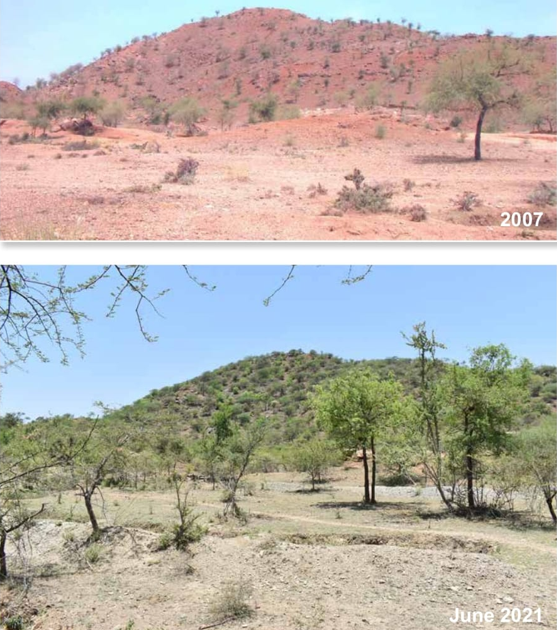
Prior to 2006, the situation was severe. Farmers depended entirely on rain-fed agriculture; survival farming was the norm due to acute water scarcity. Women walked long distances to fetch water. Pastoralist communities (camel, goat, sheep herders) were forced to migrate to Gujarat and the Malwa region in search of fodder due to lack of green cover in the village’s own pasturelands and those of neighbouring villages. The common land was official revenue wasteland – barren, unproductive, with minimal vegetation and no governance. Male out-migration for wage labour was a critical livelihood issue. Women also faced extreme difficulty in collecting household fuelwood.
Role and Achievements in Rangeland management/restoration:
i) Area of Land Involved and location:
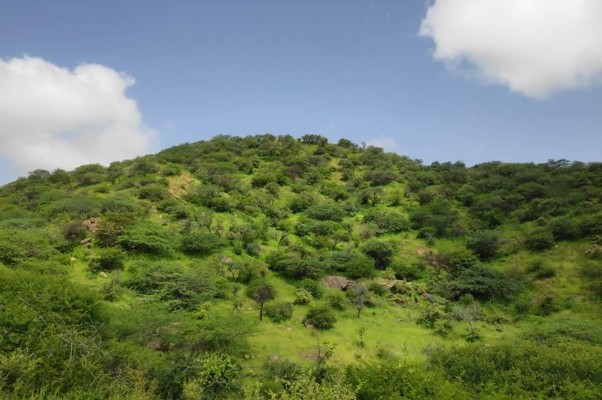
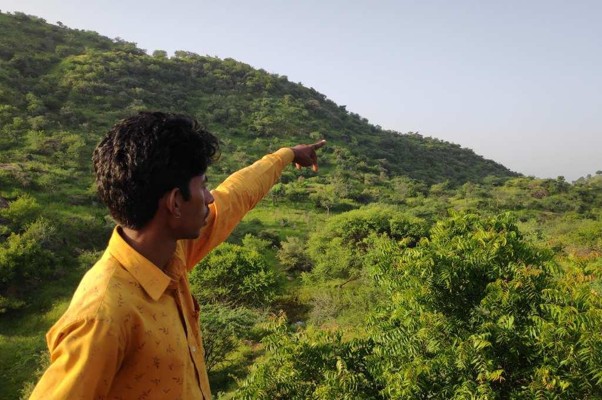
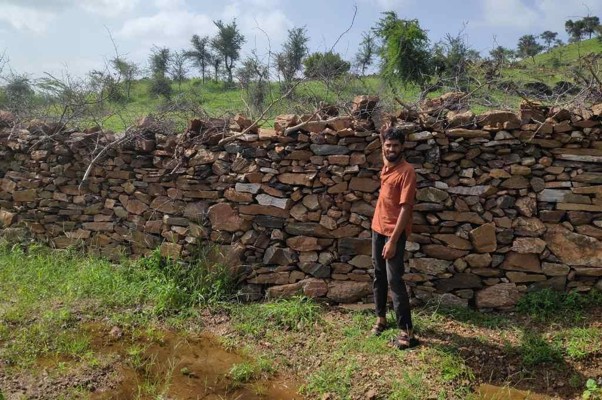
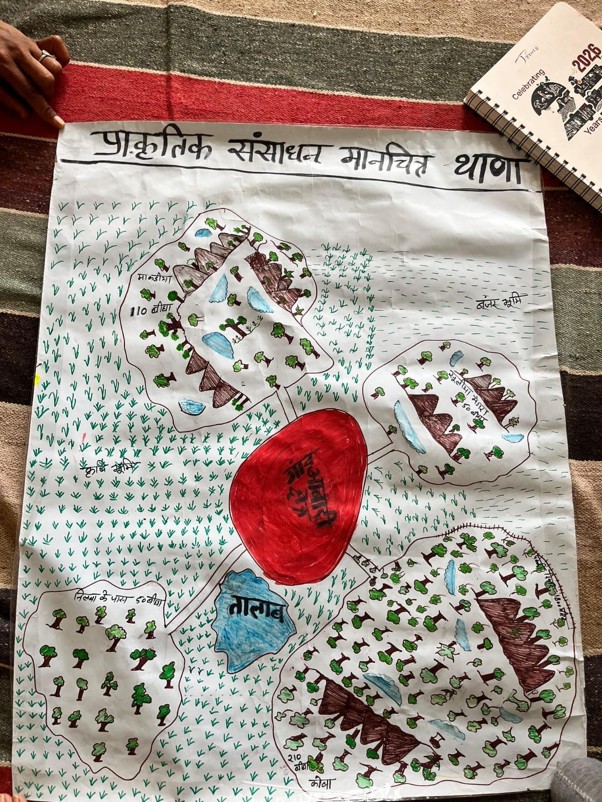
The Samiti has managed and restored common land in Thana village, Bhilwara district. Total village geographical area is 715 ha. Official records showed 115 ha of pastureland, but Samiti converted 151 bigha 19 biswa (approx. 30 ha) of revenue wasteland (sawaichak) into legal gochar (pastureland) between 2008 and 2012. The Samiti also removed encroachment of 150 bigha by a neighbouring village in 2007. A stone wall of about 3 km (eventually the complete boundary) was built using shramdan (voluntary labour), community contributions (₹100 per family), and FES support. Work on the remaining 5 km wall compounding will begin soon.
ii) No. of livestock/animal population benefitted both wild and domesticated:
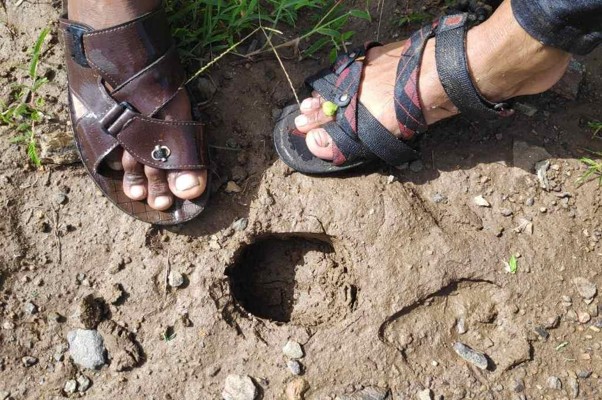
Domesticated animals benefitted: 1,850 (190 buffalo, 262 cattle, 608 goats, 102 sheep). Wild animals such as small mammals, birds, and reptiles have also returned to the restored area.
iii) Number of community members benefitted:
All 277 households (total population 1,850) benefit directly, as nearly every family depends on the common land for fodder fuelwood and ground water recharge.
iv) Any policy changes brought/achieved:
In 2020–21, the Samiti’s pastureland was recognised as a potential ‘Other Effective Area-based Conservation Measure’ (OECM) by the National Biodiversity Authority (NBA) of India. The Samiti also achieved the rare policy success of converting 151 bigha 19 biswa of sawaichak into legal gochar. The Samiti itself was formally registered in March 2021.
v) Any other impact:
A vegetation assessment conducted in 2025 over 58.27 ha shows:
- Species richness: 38
- Shannon Diversity Index: 4.44
- Standing biomass: 14.46 t/ha
- Above-ground carbon stock: 4.19–6.55 tonnes
- Fodder biomass: 5.9 t/ha
Key tree species include Acacia nilotica, Prosopis juliflora, Anogeissus pendula; regenerating saplings of Acacia leucophloea, Acacia senegal, Ziziphus nummularia, Grewia tenax indicate strong recovery.
The Samiti established a self-sustaining fee system: ₹100 per large animal (cow/buffalo) per year and ₹200 per small ruminant (goat/sheep) per year, collected annually when the pasture is opened after the monsoon (following a 4-month grazing ban). A watchman is employed at ₹5,000 per month to guard the pasture. Traditional rules (monsoon grazing ban, only dry wood collection, collective punishment for violations) are strictly enforced.
Who are all different stakeholders involved in this process and what recognition have been given already through awards, incentive etc.:
- Stakeholders: Charagah Vikas Samiti, Thana (17 members); entire village community (1850 Population); Foundation for Ecological Security (FES) – technical and financial support; Forest Department; Panchayat; Revenue Department (land conversion); National Biodiversity Authority (OECM recognition).
- Recognition received: Potential OECM status by NBA (2020–21); formal registration of Samiti (2021). No cash awards received to date.
What are the future plans or opportunities for strengthening your work on rangeland restoration and pastoralism:
The Samiti’s future action plan includes:
- Completing the remaining 5 km stone wall compounding around the pastureland;
- Removal of Prosopis juliflora (an invasive species) and conducting its auction (nilami) to generate revenue;
- Installing a new handpump for drinking water for the community and animals;
- Discussing and initiating grazing services for nomadic pastoralist communities passing through Thana village, allowing migrating livestock owners from other regions to use the restored common land.
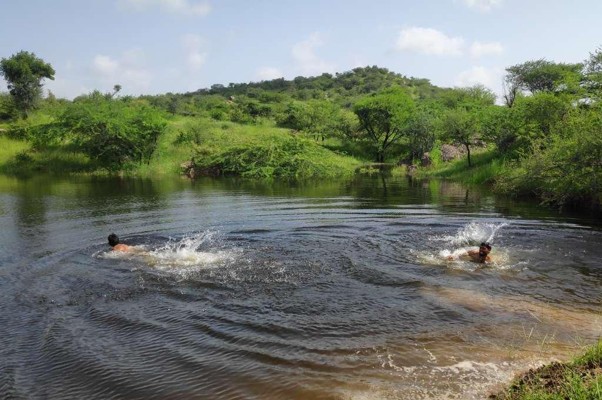
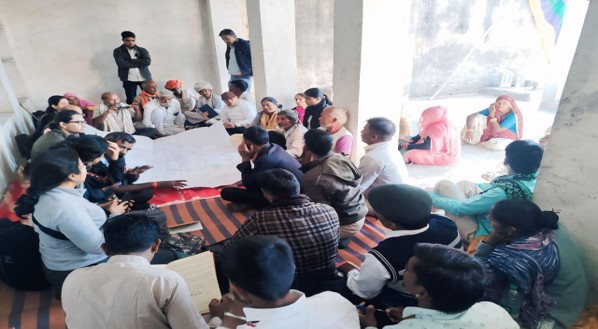
Few pictures:
Reference of two known persons/leaders and Govt. officials who are familiar about your work and achievements:
1. Shantanu Sinha Roy – Rajasthan State Lead, Foundation for Ecological Security (FES)
Phone: +91 9460376236
Email: shantanu@fes.org.in
2. Prince Vaseem – Block Team Lead, FES, Karera Block, Rajasthan
Phone: +917737921115
Email: prince.vaseem@fes.org.in