Practice Name:

Controlling the Rice Hispa pest

Details

Category Agriculture,Global Innovation,Plant Protection,Insect pest control,Bio-control
Crop Rice
Crop Family Poaceae
Scientific Name (Oryza sativa)
Vernacular Name Paddy, Rice, Chavall, Bhaat
Scout HBN
Ingredients Kodisa (Cleistanthus collinus)
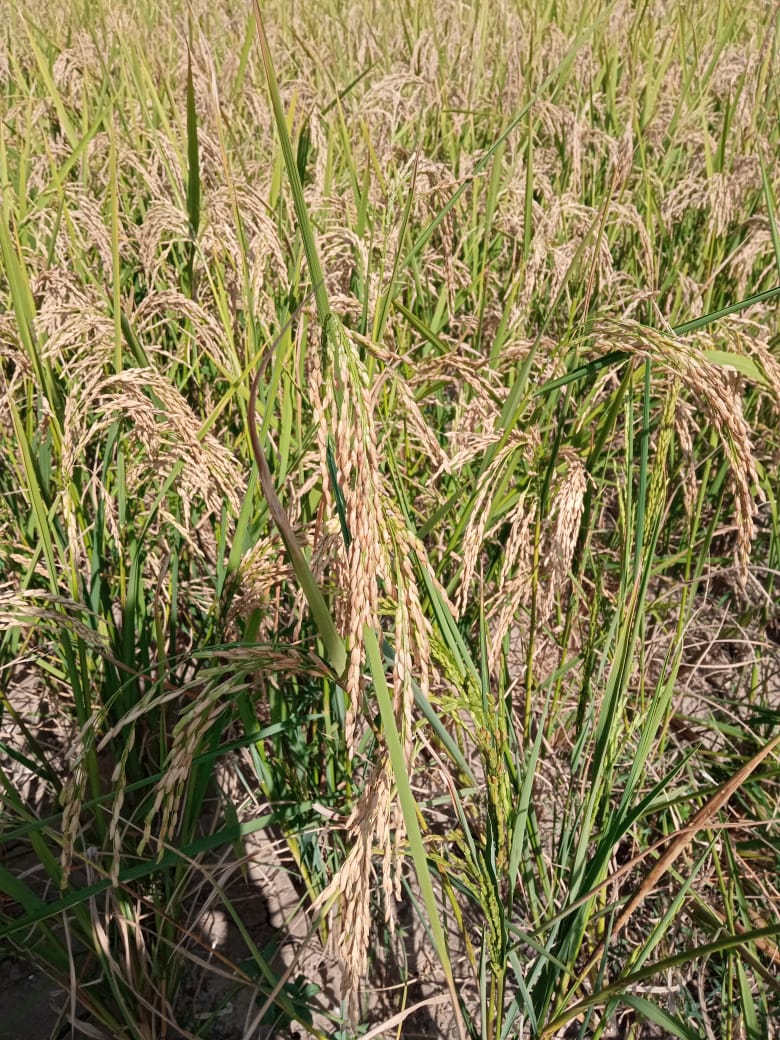
Details Of Innovation Rice hispa is a dreaded plant disease that causes immense loss of rice yield in South and South-East Asia. Panyam Sitaramaih, a tribal farmer from Andhra Pradesh in India, has been practicing biological control of the rice hispa pest (Dicladispa armigera) through his innovative use of poisonous plants for the last twelve years with effective results. This plant, locally called kodisa (Cleistanthus collinus), is found abundantly in the forested areas all along the Eastern Ghats. He learnt of the use of kodisa from his father- a cattle rearer by profession- who was a repository of knowledge on poisonous plants. However, a traditional practice of using the crushed leaves of the plant had been in use for quite some time, by the Khoya tribe of Andhra Pradesh, to which Sitaramaih belongs. The paste made out of these leaves is used as an external application to cure ulcers on animals and humans. Further the pulp of the bark is used to treat the wounds of domestic animals. Sitaramaih first learnt about the pesticidal property of the plant when he noticed dead rice hispa larvae along the water channel where the leaves of the plant were floating. Since then, he started putting branches of this plant in his rice fields and observed that the damage caused by the rice hispa pest had reduced considerably. The cost of controlling the pest has also gone down compared to the cost of chemical pesticides, on which he used to spend Rs 1000 per acre. Sitaramaih is a small farmer with 2.5 acres of land, which he plans to utilize more profitably by growing rice on two acres and using the remaining half acre for growing sesame, lentil and other crops. He gratefully acknowledges the contribution of his wife Raktamma, who helps him on the farm and suggests areas where kodisa branches are to be fixed. Other than in India, the kodisa tree occurs widely in Africa and Malaysia. Although there exists ample scope for developing it into a herbal pesticide, Sitaramaih admits the main constraint in using this technique is that it is effective only when used in the early stages of the disease.(Farmer: Panyam Sitaramaih, Thummaghoda mandalam, Chinnalguda, Khammam, comm: Comm: Vijay Chandra,ITDA, Agricultural Officer, Bhadrachalam, Khammam, Andhra Pradesh, India)
Innovator / Knowledge Provider Panyam Seetharam
Address Andhra Pradesh
Languages Spoken Telugu
Vocation Farming
State Andhra Pradesh
PAS 1 "GROWTH AND YIELD OF WHEAT IN RESPONSE TO SEED VIGOR AND SOWING DENSITIES" - https://www.scielo.br/scielo.php?script=sci_arttext&pid=S1983-21252018000400891
PAS 2 "Effect of grain weight on germination and seed vigor of wheat"/ - https://www.researchgate.net/publication/265805500_Effect_of_grain_weight_on_germination_and_seed_vigor_of_ wheat
PAS 3 "Control of rodent pests in rice cultivation" https://www.researchgate.net/publication/318378432_Control_of_rodent_pests_in_rice_cultivation
PAS 4 "EFFICACY OF PLUMERIA RUBRA POWDERS FOR THE CONTROL OF BRUCHID BEETLES DURING STORAGE - powder of Plumeria rubra flower showed good potential as insecticide for the control of cowpea weevil (Callosobruchus maculatus) on cowpea (Vigna unguiculata) during storage." https://www.researchgate.net/publication/332998378_EFFICACY_OF_PLUMERIA_RUBRA_POWDERS_FOR_THE_CONTROL_OF_BRUCHID_BEETLES_DURING_STORAGE
Other Community Practices "Cultural Control Higher cotton aphid numbers consistently develop on late-planted cotton (late April to early May) when compared to early-planted cotton (early April). Additionally, aphids prefer cotton plants that are well watered and highly fertilized. Thus avoid excessive or poorly scheduled nitrogen applications that stimulate growth later in the cropping season. Cultivar selection also appears to influence aphid population growth. Pima cultivars appear to be more susceptible to aphid infestations and associated damage. Within the Acala cotton cultivars, hairy-leaf varieties, which comprise the majority of the market, are more susceptible to aphids than are smooth-leaf varieties. Organically Acceptable Methods Cultural and biological controls and sprays of insecticidal soap, oils, and azadirachtin are acceptable for use on organically grown cotton." http://ipm.ucanr.edu/PMG/r114300111.html
Practice ID KNW0020000000048
Annotation ID GIAN/GAVL/918
Reference HBN database
Technology Transfer Terms DIY

Got questions? Contact us!