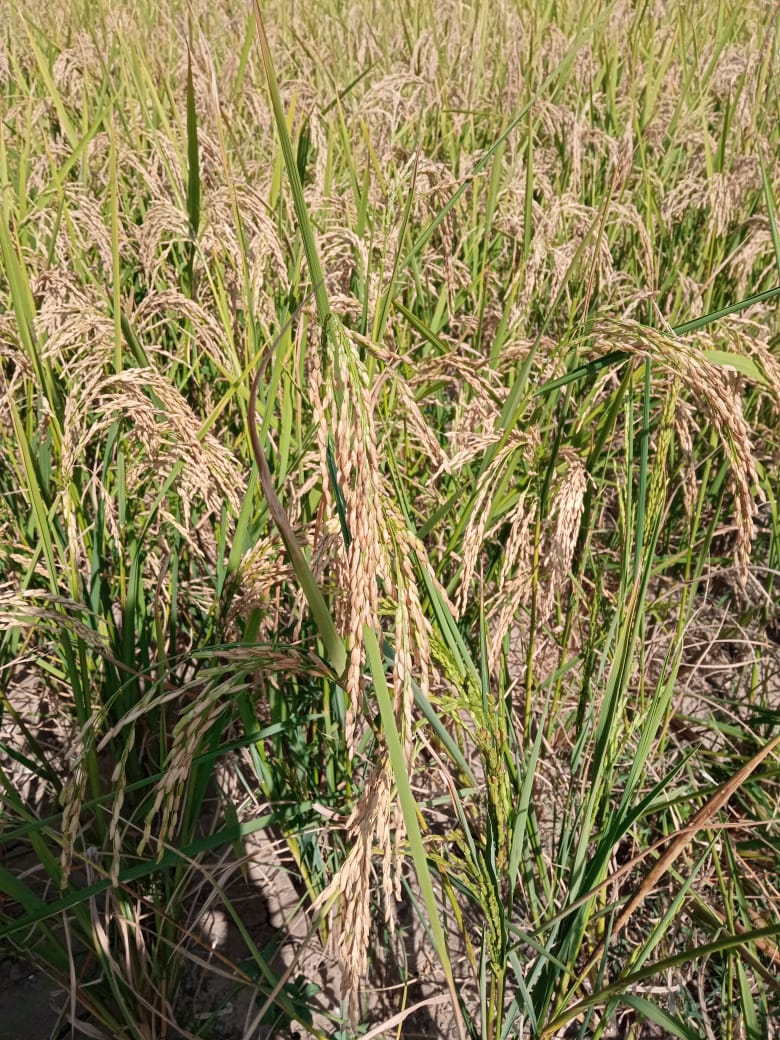
|
PAS 1
|
Yield variability in Ethiopian agriculture can be partly explained by rainfall. The degree of yield variability over time is changed not only by the amount of rainfall, but also by the pattern and frequency of the rainfall cycle. Mean annual rainfall is often the only index of rainfall quoted for a place for the purpose of rainfall-yield relationship analysis. For agriculture, however, the critical question is how often a place receives too little, enough or too much rain for a particular form of crop production to be carried out successfully. Using station level rainfall data from 1954-1994 and agricultural production data of major cereal crops from 1980-1994 for four provinces of Ethiopia, this study attempts to show patterns of rainfall and provide insight into the preparation of an early warning system in the country. Time series analysis techniques, Auto-Regressive Moving Average (ARMA) and Vector Auto-Regressive (VAR) models are used to see the pattern of rainfall and response of yield to rainfall as well as to previous yield shocks. The results of this study show that rainfall cycle can be determined only for BELG rain in Gojjam (thirty-five years) and total rain in Harar (eleven years) and Jima (seventeen years). All other series have no cyclical component; however, drought-prone provinces show some deterministic component in the rainfall process. Results from estimation of VAR show that current levels of yield respond to previous levels of yield even more than responses to rainfall in most provinces. - https://muse.jhu.edu/article/178232/summary
|
|
PAS 2
|
http://www.farmer.gov.in/imagedefault/pestanddiseasescrops/pestanddiseasesofrice.pdf
|
|
PAS 3
|
"Flower: monospermoside (butein 3-e-d-glucoside) and isomonospermoside, chalkiness’, aureoles, flavonoids (palasitrin, prunetin) and steroids, triterpene, butein, butin, isobutrin, coreopsin, isocoreopsin (butin 7-glucoside), sulphurein, "[https://www.pharmatutor.org/articles/butea-monosperma-traditional-medicinal-plant-overview]
|
|
PAS 4
|
"The study indicated Salvadora persica, a medium-sized tree can be cultivated for restoration of highly saline black soils which are not suitable for conventional arable farming." https://www.researchgate.net/publication/233338896_Growth_and_Yield_of_Salvadora_persica_A_Facultative_Halophyte_Grown_on_Saline_Black_Soil_Vertic_Haplustept
|
|
Other Community Practices
|
http://www.knowledgebank.irri.org/ericeproduction/PDF_&_Docs/Control_of_rice_insect_pests.pdf
|
|
Practice ID
|
KNW0010000001472
|
|
Annotation ID
|
GIAN/GAVL/912
|
|
Reference
|
HBN database
|
|
Pest Scientific Names
|
Spodoptera frugiperda
|
|
Technology Transfer Terms
|
DIY
|