|
PAS 1
|
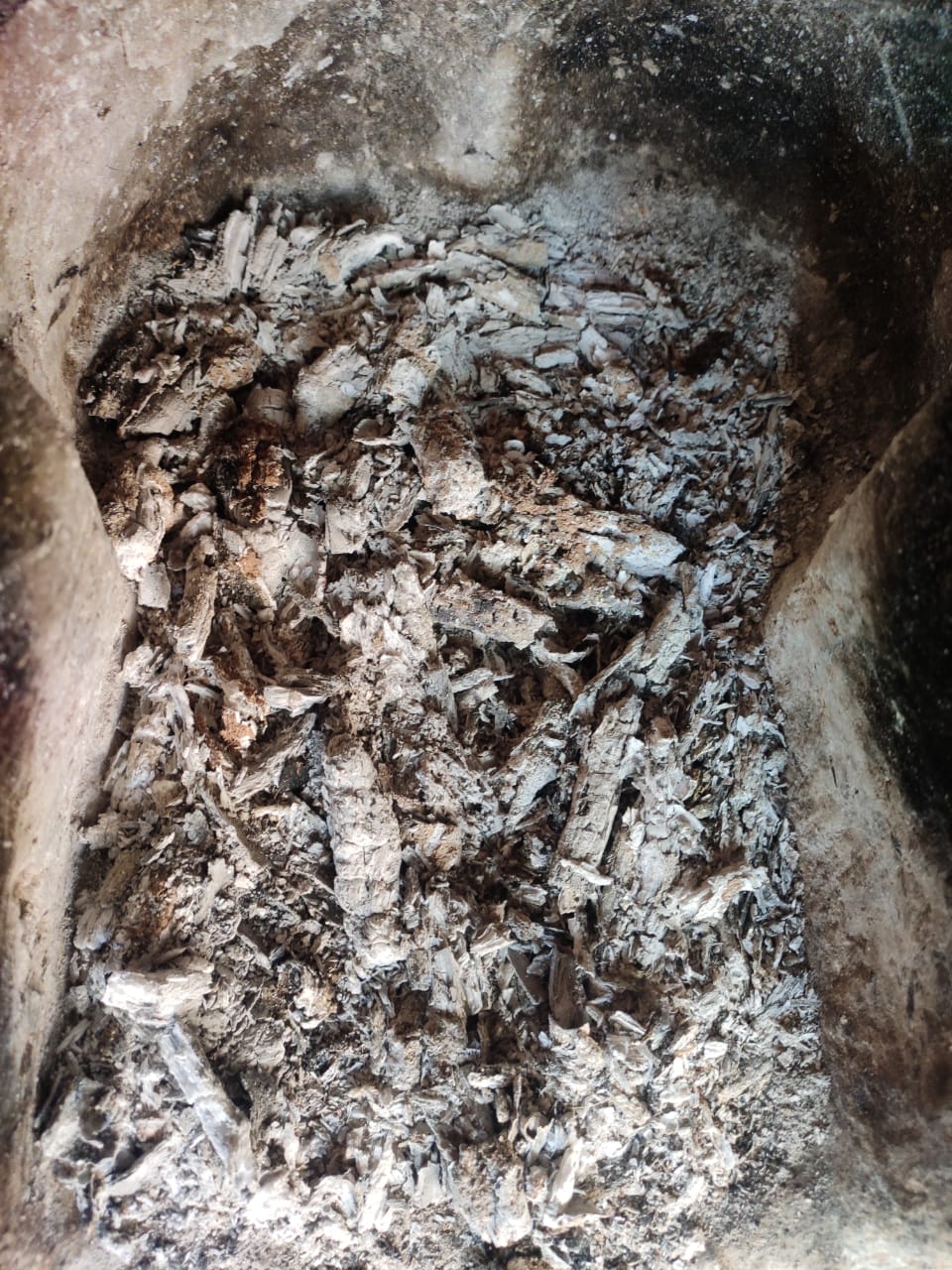
"Human Urine and Wood Ash as Plant Nutrients for Red Beet (Beta vulgaris) Cultivation: Impacts on Yield Quality - The objective of this study was to evaluate the effect of human urine and wood ash fertilization on the yield and quality of red beet by measuring the microbial, nutrient, and antioxidant (betanin) content of the roots. Red beets were fertilized with 133 kg of N/ha as mineral fertilizer, urine and ash, and only urine with no fertilizer as a control. The mineral-fertilized plants and urine- and ash-fertilized plants also received 89 kg of P/ha. Urine and ash and only urine fertilizer produced 1720 and 656 kg/ha more root biomass, respectively, versus what was obtained from the mineral fertilizer. Few fecal coliforms and coliphage were detected in mineral-fertilized and urine- and ash-fertilized red beet roots. The protein and betanin contents in red beet roots were similar in all treatments. In conclusion, this study revealed that urine with or without ash can increase the yield of red beet and furthermore the microbial quality and chemical quality were similar to the situation in mineral-fertilized products." https://pubmed.ncbi.nlm.nih.gov/20050665/
|
|
PAS 2
|
"Management of root-knot disease of tomato by the application of fly ash in soil" - https://bsppjournals.onlinelibrary.wiley.com/doi/pdf/10.1046/j.1365-3059.1997.d01-199.x
|
|
PAS 3
|
"Biomass ashes and their phosphorus fertilizing effect on different crops - The reutilization of biomass ashes in agriculture is an important issue to create nutrient cycles and to save fertilizer. To analyse the P fertilization effect of crop biomass ashes (rape meal ash (RMA), straw ash (SA), and cereal ash (CA)) in interaction with different crops, two pot experiments with a poor loamy sand deficient in P were carried out. Besides the three ash treatments, other treatments included triple superphosphate (TSP) as a high soluble P source, potassium chloride (KCl) as a high soluble K source, and a control (CON) without P and K. The main crops (maize, lupin, summer barley, and oilseed rape) were cultivated in the first experiment from April to May and the catch crops (oil radish, phacelia, italian ryegrass, and buckwheat) were cultivated in the second experiment from August to September. Plant parameters (biomass and P uptake of shoots), soil pH, different P pools of the soil (total P (Pt), water soluble P (Pw), double lactate soluble P (Pdl), oxalate soluble P (Pox)), P sorption capacity (PSC), and the degree of P saturation (DPS) were investigated. The fertilization effect of biomass ashes was comparable with that of TSP. On average of all crops, the highest P uptake (86.7 mg pot−1) was found after RMA application, and the lowest P uptake (66.6 mg pot−1) for CON. The readily bio-available soil P contents (Pw and Pdl) were significantly increased when P was supplied, regardless of whether P was given with ash or with high soluble TSP. The P fertilization effects also depended on the cultivated crops. The ash treatments resulted in highest increases of soil Pw values when combined with buckwheat cultivation. After buckwheat harvest the Pw content in the control was 8.0 mg kg−1, and in the ash treatments between 13.9 mg kg−1 (CA) and 15.7 mg kg−1 (RMA). From the results of this study we conclude, that crop biomass ashes can be an adequate P source comparable to that of highly soluble commercial P fertilizer" https://www.researchgate.net/publication/226294263_Biomass_ashes_and_their_phosphorus_fertilizing_effect_on_different_crops
|
|
Agro Ecological Zone
|
Agro Ecological Sub Region (ICAR) Central (Malva ) Highlands, Gujarat Plains and Kathiawar, Peninsula Ecoregion (5.2), Agro-Climatic Zone (Planning Commission) Gujarat plains and hills region (XIII), Agro Climatic Zone (NARP) South Gujarat Zone (GJ-2)
|
|
Other Community Practices
|
"Besides being a laxative, senna is used in splenic enlargements, anaemia, typhoid, cholera, jaundice, rheumatism, tumours, foul breath and bronchitis, and probably in leprosy. The ease of cultivation and high price for the leaves is attracting farmers for large scale cultivation." [C., Jnanesha & Kumar, Ashish & Tk, Vanitha & Verma, Deepak. (2018). Opportunities and challenges in the cultivation of senna (Cassia angustifolia Vahl.). 06. 41-43. ] https://www.researchgate.net/publication/327572522_Opportunities_and_challenges_in_the_cultivation_of_senna_Cassia_angustifolia_Vahl#:~:text=Besides%20being%20a%20laxative%2C%20senna,farmers%20for%20large%20scale%20cultivation.
|
|
Practice ID
|
KNW0020000000337
|
|
Annotation ID
|
GIAN/GAVL/90
|
|
Reference
|
HBN database
|
|
Technology Transfer Terms
|
DIY
|