|
Details Of Innovation
|
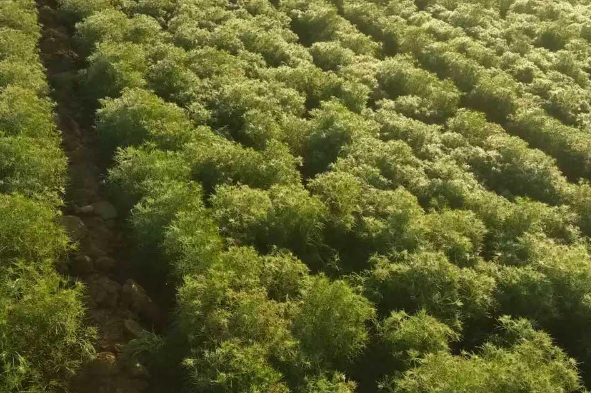
In the humid and cloudy winter weather, blight disease, known locally as "kaaliya," affects cumin (Cuminum cyminum) crop, due to which the plants wilt and the farmers suffer losses. To prevent this disease, the field is first prepared for sowing by plowing with the help of bullocks and removing the residues of the earlier crop. Then beds measuring approximately 1.9 m wide and 4.5 m long with boundaries are prepared for sowing. The distance between such plots is determined according to the area and the type of land. Boundaries are properly made. Then cumin seeds are scattered by hand in the beds. After cultivation, the land is run by a toothed sickle to allow the water to seep in. Finally, the beds are watered. In the normal method, the cumin seeds are scattered for sowing in the beds and then mixed in soil with the help of a toothed sickle. Due to this process, the seeds do not mix properly in soil, and growth is not desired. Whereas when the cumin seeds are scattered in the bullock-plowed field, they get mixed properly with soil, and the growth of the corns is abundant. This is a self-developed practice.
|