|
Details Of Innovation
|
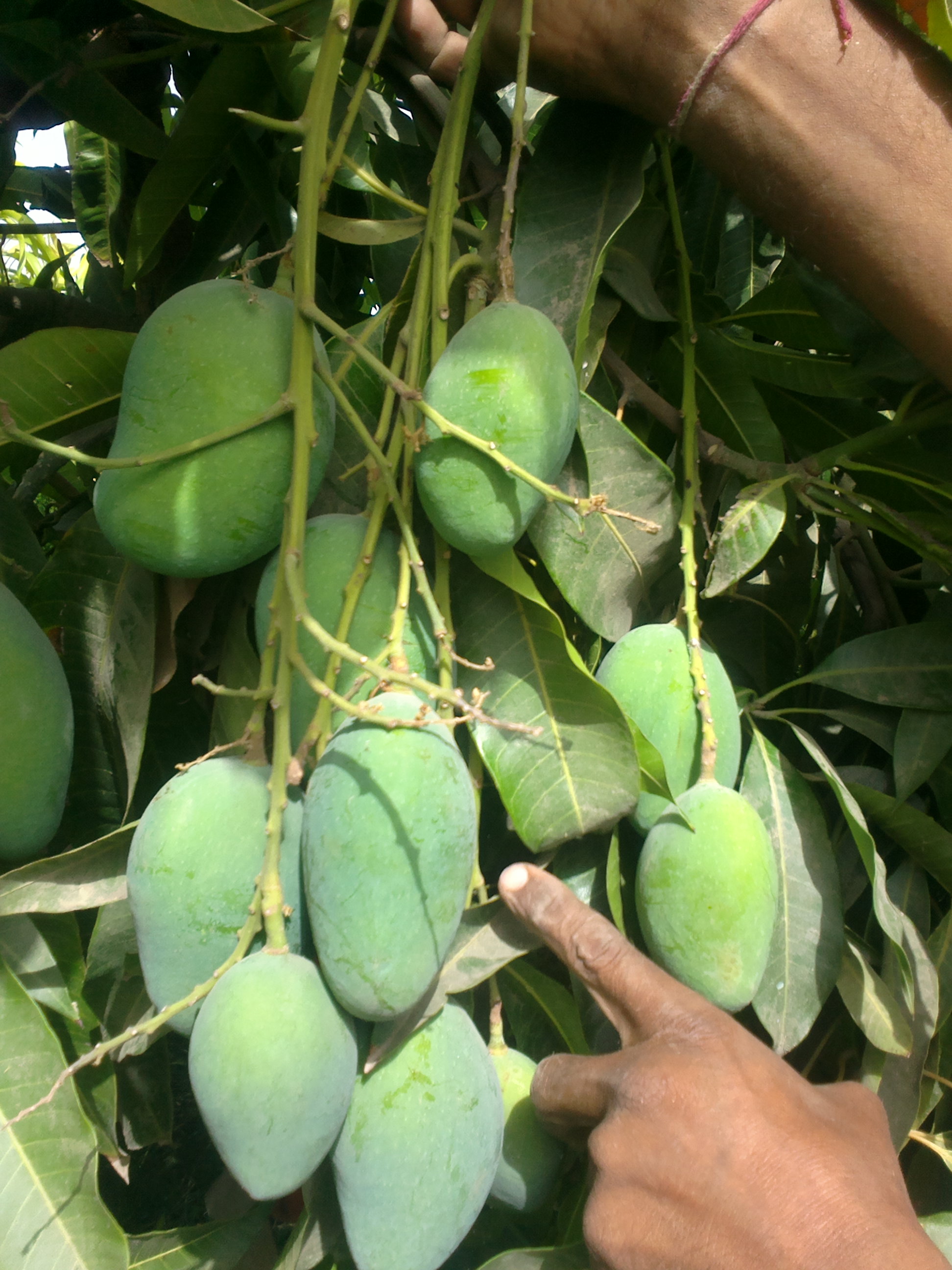
Dhirubhai Bhumabhai Naik of Gujarat takes to geometry to protect his mango crop. In doing so, he goes beyond the the Pythagorean theorem. First he says the pyramid is a combination of four triangles: No dispute about that if one takes a three-dimensional view. What is difficult to gulp like a raw mango is his construction of triangles, which is a bit obtuse. He constructs his cardboard pyramid as follows: A pyramid is effective that if the length of the base of the pyramid is x, then the two sides can be taken 19-20x. For example, if the base is 10 centimetres, then the two sides of the pyramid will be 19-20 x10-9.5. Hence the three sides of the triangle become 10 x 9.5 x 9.5. Such a pyramid can be made from cardboard, wood or cement. Around the trees of mango (Mangifera indica) and sapota (Achras zapota), four pyramids are placed. These should be placed in such a manner that sunrays fall directly on the pyramid. This has two benefits: One the crop is protected from direct sunrays and, two, nitrogen becomes available. And fertilizers containing nitrogen are costly. The pyramid is a double benefit all right. How the much-needed nitrogen, available in plenty in nature in a different form, becomes available in the cardboard pyramidal method is obviously a complex question. In fact, it perhaps answers the pyramidal question why the ancient Egyptians constructed the pyramids in the first place. However, Dirubhai is concerned with saving his mango crop. If it serves the purpose of saving his mango inflorescence that is good enough for him. If the cardboard pyramid helps form organic fertilizer the better. The pyramidal question is pure speculation, better left to Egyptologists who have not yet deciphered hieroglyphs. If one understands nature like Dirubhai does and mould the understanding into ones benefit and for the benefit of ones fellowmen, like supplying them with luscious and delicious mangoes, it is serving the greater purpose all right.
|