|
PAS 1
|
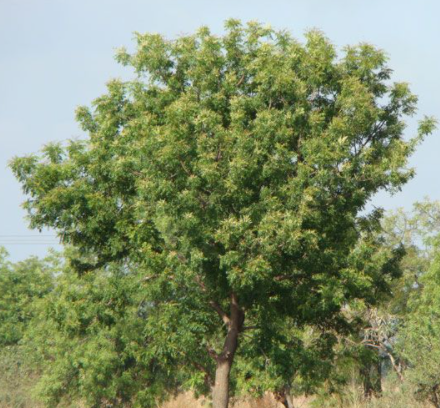
"Neem’s active ingredients and their impact on pests - It acts on insects by repelling them, inhibiting feeding, and disrupting their growth, metamorphosis and reproduction. Neem-based formulations do not usually kill insects directly, but they can alter their behavior in significant ways to reduce pest damage to crops, and reduce their reproductive potential."https://winrock.org/factnet-a-lasting-impact/fact-sheets/use-of-neem-as-a-biological-pest-control-agent/#:~:text=It%20acts%20on%20insects%20by,and%20reduce%20their%20reproductive%20potential.
|
|
PAS 2
|
"Evaluation of the tobacco plant as botanical pesticide [1994] - The effectivity of tobacco spray and tobacco leaf dust against insect pests of tomato, cowpea, mungo, eggplant, garlic and corn under field conditions was evaluated. Tobacco aqueous spray was prepared from ground tobacco leaves at 1:10 tobacco: water ratio. Ground tobacco leaves were used as powder dust. Water alone and two standard insecticides, Lannate and Decis, were used as controls. Treatments were applied at 10 days interval. Tobacco spray was effective against beanfly and bean aphid with a population reduction of 89 percent and 97 percent, respectively. Tobacco dust was effective against tomato cutworm and beanfly reducing their populations by 89 percent and 79 percent, respectively. Leafhopper, thrips and corn earworm were reduced by 50-69 percent using either tobacco spray or dust. Corn and tomato yields from plots sprayed with tobacco extracts amd cowpea yield from dusted plots were comparable to those sprayed with the check insecticides." https://agris.fao.org/agris-search/search.do?recordID=PH9610779
|
|
PAS 3
|
Bio-efficacy of cow urine on crop production: A review - "In organic farming, cow urine is used for preparation of number of growth promoter and bio-pesticides, which are effective in improving soil fertility, and in the management of large number of pests and diseases in varied groups." https://www.researchgate.net/publication/327141912_Bio-efficacy_of_cow_urine_on_crop_production_A_review#:~:text=In%20organic%20farming%2C%20cow%20urine,increased%20with%20cow%20urine%20application.
|
|
Practice ID
|
DTP0010000002824
|
|
Annotation ID
|
GIAN/GAVL/427
|
|
Reference
|
Lok(3)6, Dec.1998, Pg.No.-10
|
|
Technology Transfer Terms
|
DIY
|