| Category | Crop Production |
| Crop | Sesame |
| Crop Family | Pedaliaceae |
| Scientific Name | (Sesamum indicum) |
| Vernacular Name | Til, tila |
| Scout | HBN |
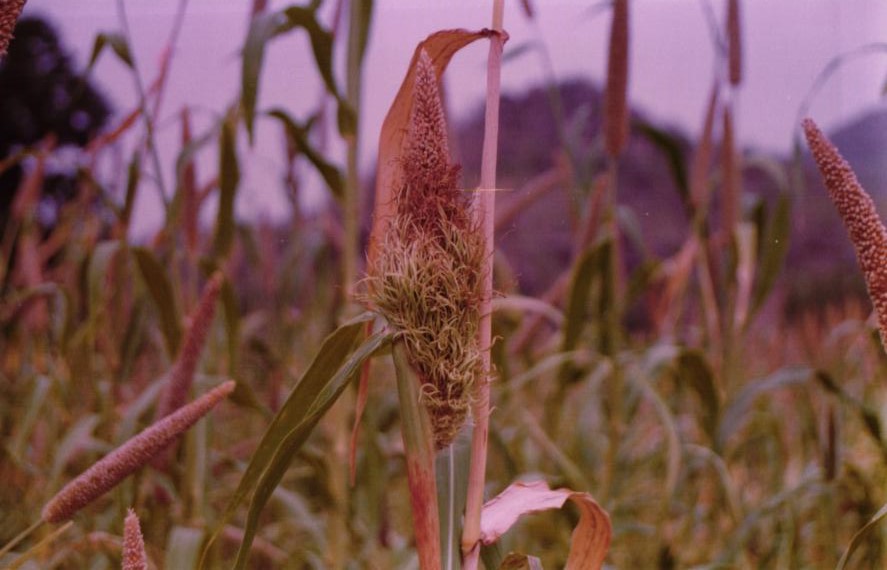
| Ingredients | Seeds of bajra or pearl millet (Pennisetum typhoides). |
| Details Of Innovation | The farmer sows sesame after the harvest of pearl millet to increase the productivity of the soil. After harvesting bajri or pearl millet (Pennisetum typhoides) in the summer, he sows sesame (Sesamum indicum) during the monsoon season, when the chances of rainfall are less. He lets the residues of pearl millet (for example, the stem) after harvesting the grains in the field. The field is then properly plowed. The crop residues provide ample organic matter for the sesame crop, which results in a better yield. |
| Innovator / Knowledge Provider | Ratilal Vallabhai Patel |
| District | Kheda |
| KVK District | KrishiVignan Kendra, Gujarat Vidyapith, Dethli, District:- Kheda Phone No.02694-291252, e-mail:kvkkheda@gmail.com |
| Address | village : Jhanda, district - Kheda, Gujarat |
| Languages Spoken | Gujarati |
| Vocation | Farming |
| State | Gujarat |
| PIN Code | 387650 |
| PAS 1 | "The role of crop rotations in determining soil structure and crop growth conditions."https://www.researchgate.net/publication/232808329_The_role_of_crop_rotations_in_determining_soil_structure_and_crop_growth_conditions |
| PAS 2 | "Crop growth and productivity may differ under different sowing methods and planting densities. A field experiment was conducted to evaluate the influence of different sowing methods and planting densities on growth, yield, quality and economic returns of cotton. Sowing methods included pit planting (1 m × 1 m pits), bed planting (75 cm apart beds), ridge planting (75 cm apart ridges) and line sowing with varied inter row spacing (25, 50 and 75 cm). Sowing methods significantly affected growth and yield of cotton. Pit planting imposed maximum increase in plant height (152 cm), number of monopodial branches (4.7) and sympodial branches (22.6) per plant, number of unopened (9.4) and opened bolls (41.1) per plant, and average boll weight (3.0 g) of cotton. However, highest seed cotton yield (2944.5 kg ha ) was obtained by flat sowing on 25 cm apart rows owing to highest planting density per unit area. Maximum ginning out turn (GOT) (41.6%) was noticed in pit planting of cotton, while, fiber quality was not affected significantly by sowing methods. Economic analysis showed that economic returns and benefit cost ratio (BCR) (1.52) was elevated by flat sowing on 25 cm apart rows. In conclusion, maximum seed cotton yield and economic returns can be acquired by flat sowing with 25 cm apart rows, while, fiber quality is independent of sowing methods.[ EHSANULLAH ET AL., EFFECT OF DIFFERENT SOWING METHODS AND PLANTING DENSITIES ON GROWTH, YIELD, Pakistan J. Agric. Res. Vol. 30 No.1, 2017]" https://www.cabi.org/gara/FullTextPDF/2017/20173377106.pdf |
| Agro Ecological Zone | Agro Ecological Sub Region (ICAR) Central Highlands (Malwa), Gujarat Plain And Kathiawar Peninsula, Semi-Arid Eco-Region (5.2) , Agro-Climatic Region (Planning Commission) Gujarat plains and hill region (XIII), Agro Climatic Zone (NARP) Middle Gujarat Agro Climatic zone(GJ-3), North Gujarat Zone GJ-5 |

| Practice ID | KNW0010000001212 |
| Annotation ID | GIAN/GAVL/40 |
| Reference | HBN database |
| Technology Transfer Terms | DIY |
GIAN is the first incubator of grassroots innovations set up in 1997 in collaboration with the Gujarat government and supported by SRISTI and IIMA in addition to the Honey Bee Network.
Registration Nos. –
BPTA (Bombay Public trust Act), 1950 – F/ 5830 (Ahmedabad)
SRA (Societies Registration Act) , 1860 – GUJ/5981/Ahmedabad
FCRA (Foreign Contribution Regulation Act) – 041910244
Bungalow No 1, Satellite Complex, Mansi Cross Roads, Judges Bunglow Rd, Satellite, Ahmedabad, Gujarat -380015
GIAN ©All rights reserved.