|
PAS 1
|
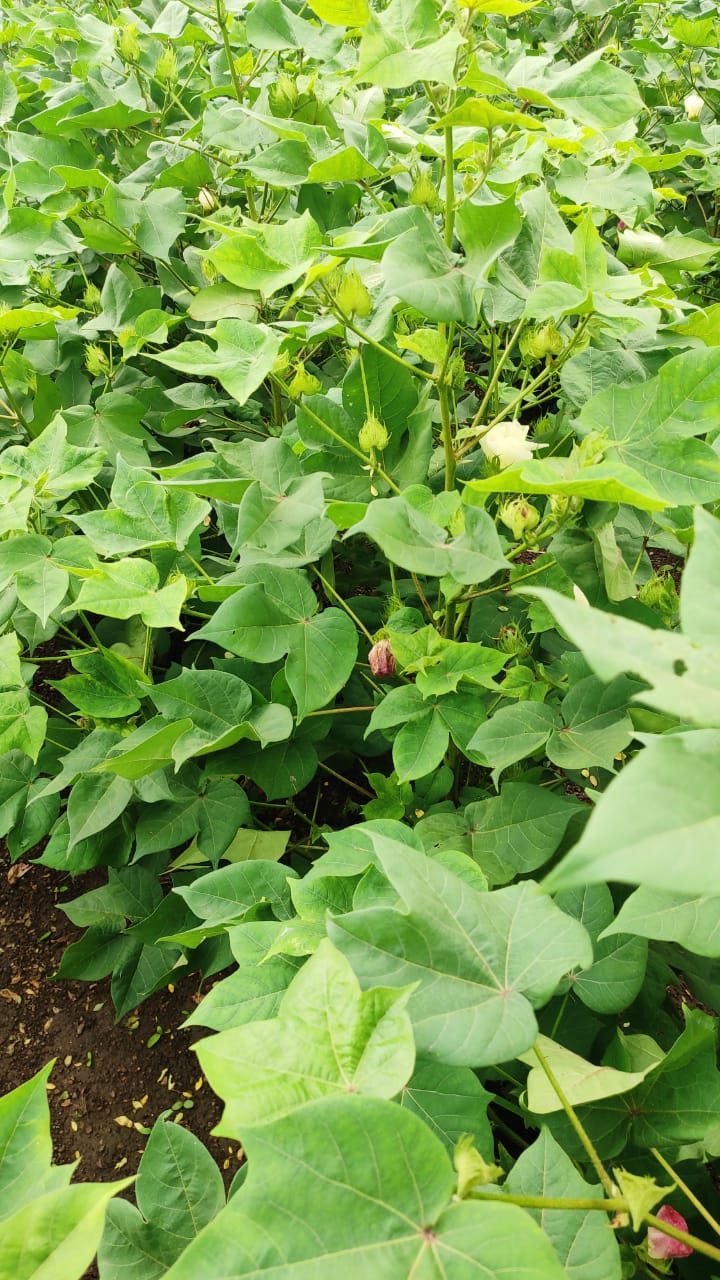
"Crop rotation is another cultural control measure widely adopted by most cotton farmers in Zimbabwe. Cotton is rotated with other crops in order to break the life cycle of pests and diseases. Crop rotation is effective on red and pink bollworms which have narrow host ranges. African and spiny bollworms are polyphagous, so will not be affected by rotations. Pink bollworm: While some insect pests are aggravated others are suppressed with rotations. The pink bollworm can only survive on cotton squares and bolls, thus large-scale rotation of cotton has a dramatic impact on this pest (Blasingane et al., 1991). Rotations crops used include maize, wheat and soyabeans." [Mapuranga, Rangarirai&Chapepa, B. &Mudada, Nhamo. (2015). Strategies for integrated management of cotton bollworm complex in Zimbabwe: A review International Journal of Agronomy and Agricultural Research (IJAAR). International Journal of Agronomy and Agricultural Research (IJAAR). 7. 23-35.] https://www.researchgate.net/publication/282358688_Strategies_for_integrated_management_of_cotton_bollworm_complex_in_Zimbabwe_A_review_International_Journal_of_Agronomy_and_Agricultural_Research_IJAAR
|
|
PAS 2
|
"Results of this study have shown that occurrence and abundance of cotton and cowpea pests is not affected by cotton and cowpea intercropping systems. Pesticides applied on cotton to control cotton pests in different intercropping arrangements significantly reduced populations of cowpea pests. This would therefore help famers reduce costs associated with pest’s management if cotton and cowpea were grown as intercrops as opposed to when each crop was grown as sole crop." [Kabambe, V.. (2016). Effects of intercropping systems and foliar pesticides applied to control cotton (Gossypiumhirsutum L) pests on incidences of cowpea (Vignaunguiculata L. Walp) pests. 6. 313-321.] https://www.researchgate.net/publication/318595362_Effects_of_intercropping_systems_and_foliar_pesticides_applied_to_control_cotton_Gossypium_hirsutum_L_pests_on_incidences_of_cowpea_Vigna_unguiculata_L_Walp_pests
|
|
PAS 3
|
"One of the major hurdles in choosing the right intercrop combination for pest suppression is to determine which combinations will reduce pest abundance, since all combinations of crops will not produce the desired effect. So, intercrop can be a used as sole approach to pest management or it can be combined with other pest management strategies such as host-plant resistance, augmentative biological control, and chemical control. The successful use of intercropping to manage pests depends on a thorough knowledge of how distinct crop characteristics and combinations will influence the behavior of pest and beneficial arthropods." [AtanuSeni. “Role of Intercropping Practices in Farming System for Insect Pest Management. Acta Scientific Agriculture 2.2 (2018): 08-11.] https://actascientific.com/ASAG/pdf/ASAG-02-0037.pdf
|
|
Agro Ecological Zone
|
Agro Ecological Sub Region (ICAR) Western Plain, Kachchh And Part Of Kathia ( 2.4, 2.3), Agro-Climatic Zone (Planning Commission) Gujarat Plains & Hills Region (XIII) , Agro Climatic Zone (NARP) North West Zone (GJ-5) North Saurashtra (GJ-6)
|
|
Practice ID
|
DTP0010000002903
|
|
Annotation ID
|
GIAN/GAVL/382
|
|
Reference
|
lok(6) 1-2, Jan-Apri-2001, Pg No. 6
|
|
Pest Group
|
sucking
|
|
Pest Scientific Names
|
Cicadellidae
|
|
Technology Transfer Terms
|
DIY
|