|
PAS 1
|
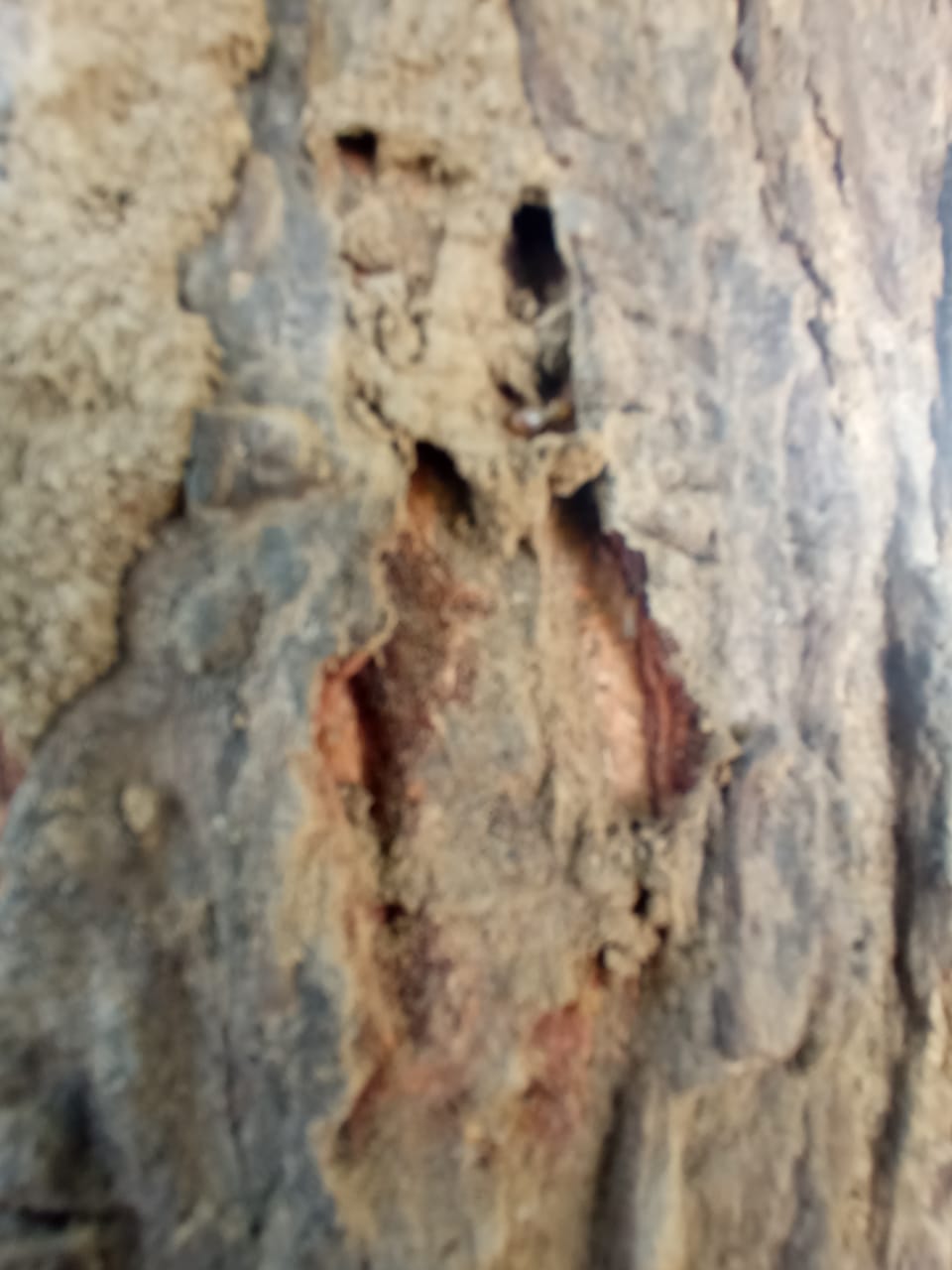
"Cultivating Ricinus communis on the plots attacked by termites. The next cropping season the termite population is reduced considerably. Also castor press cake can be incorporated into the soil." https://krishi.icar.gov.in/jspui/bitstream/123456789/2297/1/Termite%20control%20by%20without%20chemical.pdf
|
|
PAS 2
|
"Primary screening of the extracts, oil and milky latex shows that C.procera, L.camara, A.bracteata, R.communis (oil) and E.tirucalli (latex) are having significant effects and 100% mortality was recorded in termite population. Dose of the formulation were also standardized in lab conditions. A dose of 300µl of C.procera, A.bracteata, R.communis (oil) and E.tirucalli (latex) was lethal and 100% mortality was recorded." [Sahay, Nirmal & Prajapati, Chetankumar & Panara, Keyur & Patel, Jayshree & Singh, Pawan. (2013). Anti-termite efficacy of plants selected from the SRISTI database of Grassroots Innovations. Journal of Biopesticides. 7.] https://www.researchgate.net/publication/262534596_Anti-termite_efficacy_of_plants_selected_from_the_SRISTI_database_of_Grassroots_Innovations
|
|
PAS 3
|
"Termite is one of the most damaging insects in agriculture, forestry and housing. Colonized living of this insect makes its life more protected than other social insects. Therefore, it has become very difficult to prevent this insect from damaging our agriculture. Though many measures have been suggested to control termites, an integration of all cultural, physical and biological methods would be more effective. Adding organic material to the soil, crop rotation, physical barriers, encouraging predators, plant parts and plant extracts can be used effectively for the control of this insect. " [Kumari, Kalyani & Patil, Kalyanrao & Sharma, Shikha. (2013). Farmer Friendly Ways to Control Termites. Popular kheti. 1. 25-29.] https://www.researchgate.net/publication/268153608_Farmer_Friendly_Ways_to_Control_Termites
|
|
Agro Ecological Zone
|
Agro Ecological Sub Region (ICAR) North Gujarat plain (Inclusive of Aravalli range and East Rajasthan Uplands) hot, dry, semi – arid eco-subregion (4.2), Agro-Climatic Zone (Planning Commission) Gujarat Plains and Hills Region (XIII) , Agro Climatic Zone (NARP) North Gujarat Agroclimatic zone (GJ-4)
|
|
Other Community Practices
|
"The paste of the leaf of Kitamari is applied over the wounds for helping in quick healing. The decoction of the leaf is consumed in a dose of 50 ml to treat dysmenorrhea and difficulty in labor. The decoction of the bark or whole plant is taken in a dose of about 40 ml to treat intestinal worm. The paste of the leaf of Kitamari is applied over eczema for its treatment. The powder of the seed is given with powder of black pepper to treat fever. The paste of the root is applied over the area over localized swelling for its treatment." https://www.flowersofindia.net/catalog/slides/Worm%20Killer.html
|
|
Practice ID
|
DTP0010000002592
|
|
Annotation ID
|
GIAN/GAVL/318
|
|
Reference
|
Lok(4)1, feb-1999, pg.no-5
|
|
Pest Group
|
Insecta
|
|
Pest Scientific Names
|
(Microtermes obesi)
|
|
Technology Transfer Terms
|
DIY
|