| Category | Crop Protection and Disease Management |
| Crop | Mango |
| Crop Family | Anacardiaceae |
| Scientific Name | (Mangifera indica) |
| Vernacular Name | Mango Tree |
| Scout | HBN |
| Ingredients | Sand, snuff and leaves of tobacco (Nicotina tabacum) |
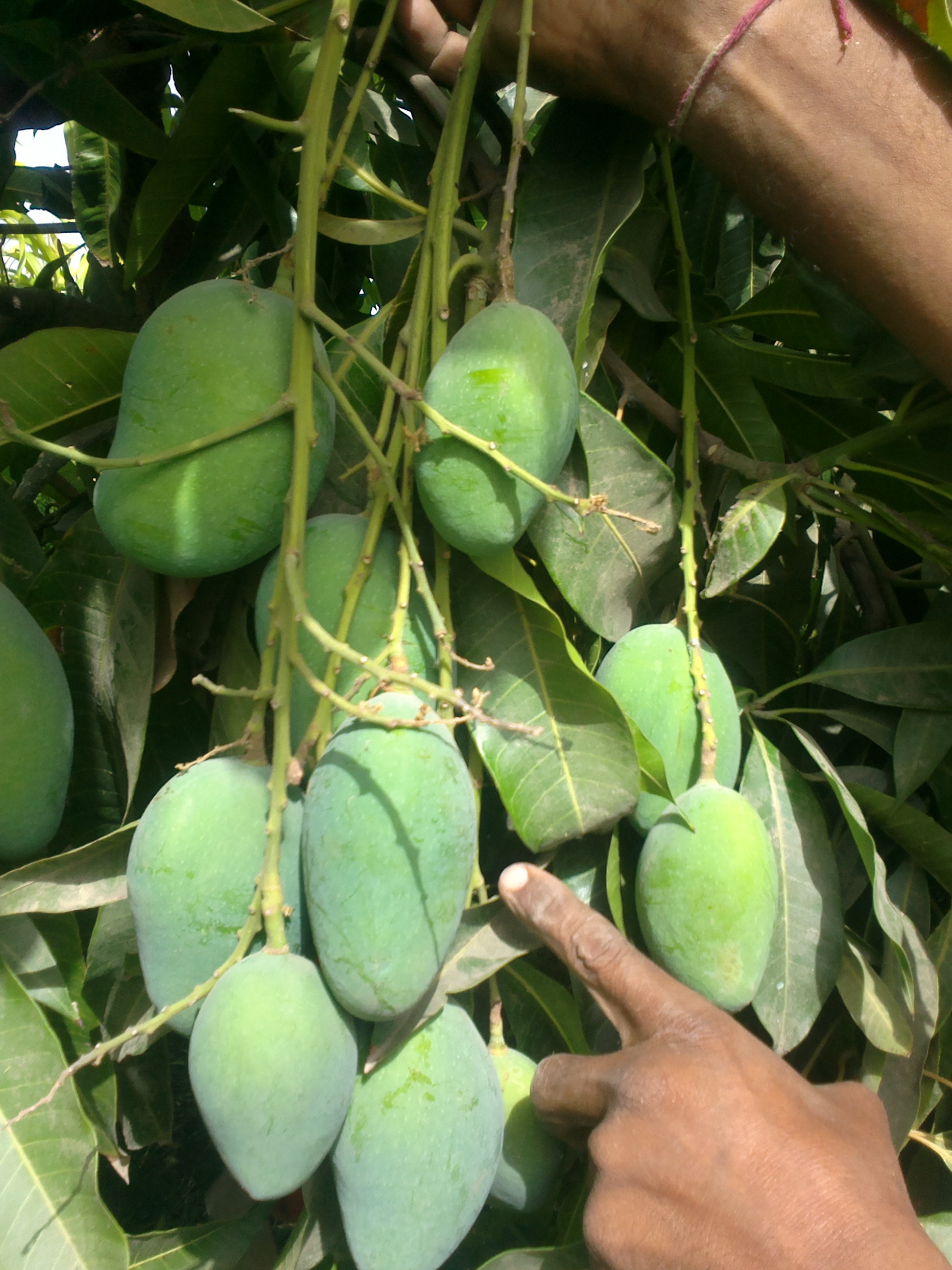
| Details Of Innovation | Rajnikant Kelabhai Patel of Gujarat uses the pungent tobacco (Nicotina tabacum) leaves as well as snuff made from its leaves and sand to control powdery mildew pest on the mango crop. He takes one kilogram of tobacco (Nicotina tabacum) leaves and snuff and adds these to five kilogram of moist sand. If the sand is dry then it should be moisoned. He sprays the herbal granules on the mango (Mangifera indica) crop as soon as flowering takes place. The tobacco-spraying must be done before the mango crop is affected by powdery mildew (chara). The same procedure can be applied for protecting fennel (Foeniculum vulgare), cumin (Cuminum cyminum) and groundnut (Arachis hypogaea) crops that are also affected by powdery mildew. |
| Innovator / Knowledge Provider | Rajnibhai Keshabhai Patel |
| District | Surendranagar |
| KVK District | Krishi Vigyan Kendra,Nanakanthasar, Ta.-Chotila,Distt. Surendranagar-363520 |
| Address | Mu Modasa, Gujarat |
| Languages Spoken | Gujarati |
| Vocation | Farming |
| State | Gujarat |
| PIN Code | 560037 |
| PAS 1 | "Powdery mildew appears on the crop in February-March in Rajasthan. The disease results in heavy loss in yield. The green foliage, tender stem and branches get infected. Talcum-like powder spreads on whole of the plant, which dries up under severe infection (Chattopadhyaya and Maiti 9). http://isss.ind.in/pdf/2014volume/2.pdf. Common on many plants and easily recognized, powdery mildew is a fungal disease found throughout the United States. It is caused by a variety of closely related fungal species, each with a limited host range. (The fungi attacking your roses are unlikely to spread to your lilacs). Low soil moisture combined with high humidity levels at the plant surface favors this disease." https://www.planetnatural.com/pest-problem-solver/plant-disease/powdery-mildew/ |
| PAS 2 | "Among the different fungicides tested against E. polygoni in vivo conditions, propiconazole (0.025%) was the most effective fungicide ascompared to the others" https://www.researchgate.net/publication/333446333_Diseases_of_Cumin_and_its_Management |
| PAS 3 | "Single dusting of 300 meshes sulphur 20-25 kg/ha at the time of flowering in January is essential." http://isss.ind.in/pdf/ISSS%20JOURAL%20(VOLUME-4(1)%20(06-01-2.pdf |
| Agro Ecological Zone | Agro Ecological Sub Region (ICAR) Western Plain, Kachchh And Part Of Kathia ( 2.4, 2.3), Agro-Climatic Zone (Planning Commission) Gujarat Plains & Hills Region (XIII) , Agro Climatic Zone (NARP) North West Zone (GJ-5) North Saurashtra (GJ-6) |
| Practice ID | DTP0010000001163 |
| Annotation ID | GIAN/GAVL/247 |
| Reference | HBN database |
| Pest Group | disease fungus |
| Pest Scientific Names | Oidium mangiferae |
| Technology Transfer Terms | DIY |

GIAN is the first incubator of grassroots innovations set up in 1997 in collaboration with the Gujarat government and supported by SRISTI and IIMA in addition to the Honey Bee Network.
Registration Nos. –
BPTA (Bombay Public trust Act), 1950 – F/ 5830 (Ahmedabad)
SRA (Societies Registration Act) , 1860 – GUJ/5981/Ahmedabad
FCRA (Foreign Contribution Regulation Act) – 041910244
Bungalow No 1, Satellite Complex, Mansi Cross Roads, Judges Bunglow Rd, Satellite, Ahmedabad, Gujarat -380015
GIAN ©All rights reserved.