Practice Name:

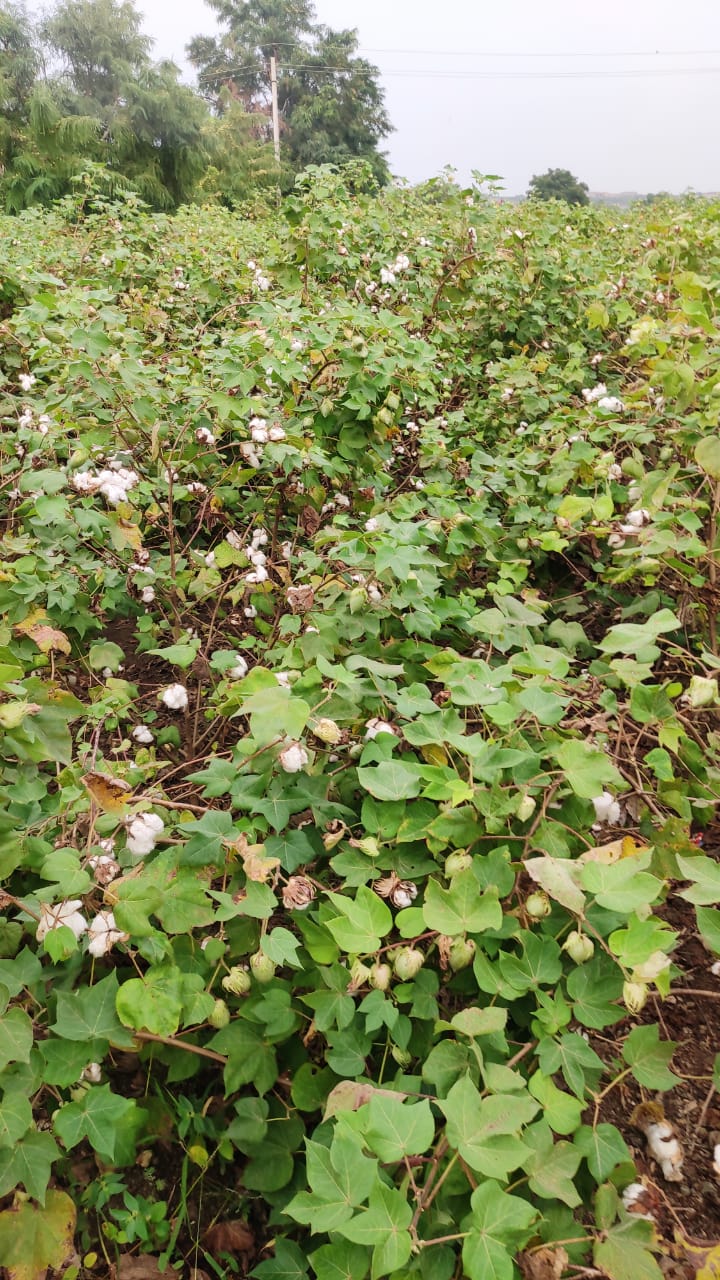
Herbal Protection for Cotton

Details

Category Crop Protection and Disease Management
Crop Cotton
Crop Family Malvaceae
Scientific Name (Gossypium spp.)
Vernacular Name Kapas
Scout HBN
Ingredients Wind killer (Clerodendron phlomidis), worm killer (Aristolochia bracteata), mamejavo (Enicostemma hyssopifolium) and neem (Azadirachta indica)
Details Of Innovation Certain insects, flies and white ants infest the cotton crop, destroying its leaves and pods. The development of cotton plant stops completely owing to these pests and parasites. They develop resistance to insecticides and pesticides, and halt the growth of the plant and pave the way for infestation by worms. The cotton crop is totally destroyed. Jadubhai knew the essence or tattva of the plants. Each of the herbs has a specific quality. A tree may have compound leaves that can halt even the fury of the wind. Jadubhai took a wind killer (Clerodendron phlomidis). The growth of wind killer at specific distances may in fact be a good idea because farm after farm, village after village, taluka after taluka have all been growing cotton. For the pests, it is an open hunting ground. So the wind killer could be a dependable wind breaker at least between villages. Then, Jadubhai collecte worm killer (Aristolochia bracteata) and well-known natural pesticides neem (Azadirachta indica) leaves and mamejavo (Enicostemma hyssopifolium). He took them in equal measure, grinded them all together in relation to the insects and pests infesting cotton, and prepared a combined essence. He then sprinkled on the cotton crop twice in a fortnight. This effort was expected to give 70 per cent plant protection for the cotton crop. Within 30 days of cotton plantation, insects come to infest the cotton crop and multiplied in the cloudy and wet weather. As for specific proportion of the herbal protection, Jadubhai took 100 gram leaves of each wind killer (Clerodendron phlomidis), worm killer (Aristolochia bracteata), mamejavo (Enicostemma hyssopifolium) and neem (Azadirachta indica).
Innovator / Knowledge Provider Jadubhai Kurjibhai Savlia
District Bhavnagar
KVK District Krishi Vigyan Kendra, At- Lok Bharati Sanosara, Ta- Sinhor, Dist.-Bhavnagar, Gujarat, India
Address Nana Asrana
Languages Spoken Gujarati
Vocation Farming
State Gujarat
PIN Code 364280
PAS 1 "Research on Sugar Application to Crops - Numerous research studies have documented the increase of beneficial insects in fields and plots treated with a sugar-water solution, suggesting its application as a biocontrol method for reducing pest populations." https://cropwatch.unl.edu/research-sugar-application-crops#:~:text=Numerous%20research%20studies%20have%20documented,method%20for%20reducing%20pest%20populations.
PAS 2 "Enhancing Insecticides with Sugar-Based Compounds" - https://gpnmag.com/article/enhancing-insecticides-sugar-based-compounds/
PAS 3 "Cotton aphid is the most common aphid on cotton in California and it can be present at any time during the growing season. Cotton aphid is highly variable in body size and color, and adults may be winged or wingless. Nymphs and adults of wingless cotton aphids vary in color from yellow to green to nearly black. The darker forms tend to be substantially larger. Nymphs that are developing into winged adults look very different from the nymphs developing into wingless adults: they bear small welts or protuberances on their bodies and may be covered with a coat of dusty-appearing whitish wax. Their body color is often greenish blue, or amber and blue." http://ipm.ucanr.edu/PMG/r114300111.html
Agro Ecological Zone Agro Ecological Sub Region (ICAR) Central Highlands (Malwa), Gujarat Plain (5.1) , Agro-Climatic Zone (Planning Commission) Gujarat Plains and hills region (XIII), Agro Climatic Zone (NARP) North Saurashtra, South Saurashtra (GJ-6,GJ-7)
Practice ID DTP0010000001102
Annotation ID GIAN/GAVL/209
Reference HBN database
Technology Transfer Terms DIY

Got questions? Contact us!