|
PAS 1
|
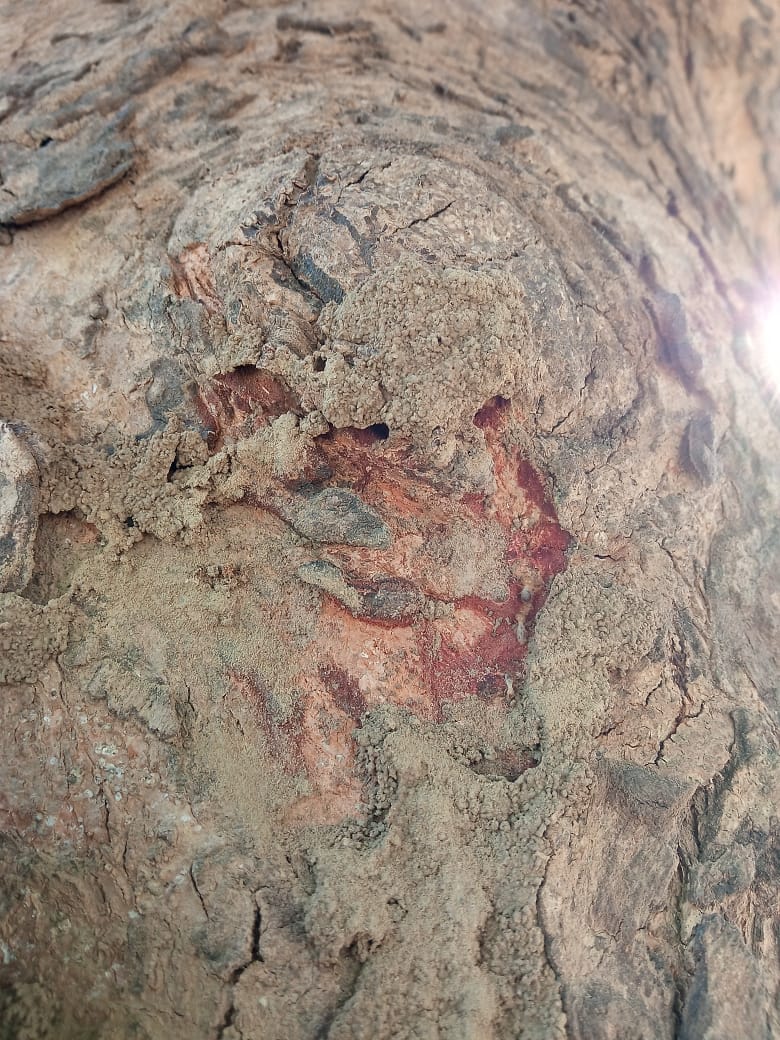
"Use of ocher and brilliant gardenia (Gardenia resinifera) for termite control. Brilliant gardenia (Gardenia resinifera) is also called as "jangali champo" in the forest area of Dang and Chhota Udaipur. This plant is 3 to 6 ft in height and bears white coloured fragrant flowers in the month of October. Fruit setting starts during the month of December and lasts up to the month of February. Seeds are light green in colour. About 150 to 250 g brilliant gardenia seeds and 100 g ocher are crushed and added to 1 L of water. This mixture is smeared on the trunk of mango (Mangifera indica) up to 2 to 3 ft height from ground level." https://mangifera.res.in/innovation.php?page=5 Dated 5/5/2020
|
|
PAS 2
|
"Adding organic material to the soil, crop rotation, physical barriers, encouraging predators, plant parts and plant extracts can be used effectively for control of this insect. HYPERLINK" https://www.researchgate.net/publication/268153608_Farmer_Friendly_Ways_to_Control_Termites#fullTextFileContent
|
|
PAS 3
|
"Vetiver oil decreased termite tunneling activity at concentrations as low as 5 μg/g sand. Tunneling and paper consumption were not observed when vetiver oil concentrations were higher than 25 μg/g sand. Bioactivity of the 8 oils against termites and chemical volatility were inversely associated. Listed in decreasing order of volatility, the major constituents of the 8 oils were: eucalyptol, citronellal, citral, citronellol, cinnamaldehyde, eugenol, thujopsene, and both α- and β- vetivone. Vetiver oil is a promising novel termiticide with reduced environmental impact for use against subterranean termites. [Zhu, B.C.R., Henderson, G., Chen, F. et al. Evaluation of Vetiver Oil and Seven Insect-Active Essential Oils Against the Formosan Subterranean Termite. J ChemEcol 27, 1617–1625 (2001). https://doi.org/10.1023/A:1010410325174]" https://link.springer.com/article/10.1023/A:1010410325174#citeas
|
|
PAS 4
|
"The potential effects of plant-derived oils on survival of dampwood termite (Zootermopsis angusticollis) workers was explored on western white pine sapwood blocks. All of the oils rapidly affected protozoa in the hindgut of termite workers and protozoa loss was closely followed by worker mortality. The effects were most rapid with wood treated with Neem, Eucalyptus or Jatropha oils, but mortality also occurred within 7 days with workers exposed to blocks treated with Jojoba or linseed oil. The results illustrate the relatively high sensitivity of dampwood termites to these types of treatment and suggest the potential for natural product control of this termite species. [Ability of plant-derived oils to inhibit dampwood termite (Zootermopsisaugusticollis) activity Rushda Fatima, Jeffrey J. Morrell]" https://scielo.conicyt.cl/scielo.php?script=sci_arttext&pid=S0718-221X2015000300020
|
|
Agro Ecological Zone
|
Agro Ecological Sub Region (ICAR) Northern Plain (And Central Highlands) Including Aravallis, Hot Semi-Arid Eco-Region (4.2) Agro-Climatic Zone (Planning Central Plateau & Hills Region (VIII) Agro Climatic Zone (NARP) Sub Humid Southern Plain Zone (RJ-7)
|
|
Other Community Practices
|
Pest Management Strategies in Traditional Agriculture: An African Perspective https://www.annualreviews.org/doi/full/10.1146/annurev.ento.45.1.631
|
|
Practice ID
|
KNW0010000001017
|
|
Annotation ID
|
GIAN/GAVL/18
|
|
Reference
|
HBN database
|
|
Pest Group
|
Chewing pest
|
|
Pest Scientific Names
|
(Macrotermes spp.), Odontotermes spp.)
|
|
Technology Transfer Terms
|
DIY
|