| Category | Crop Protection and Disease Management |
| Scout | HBN |
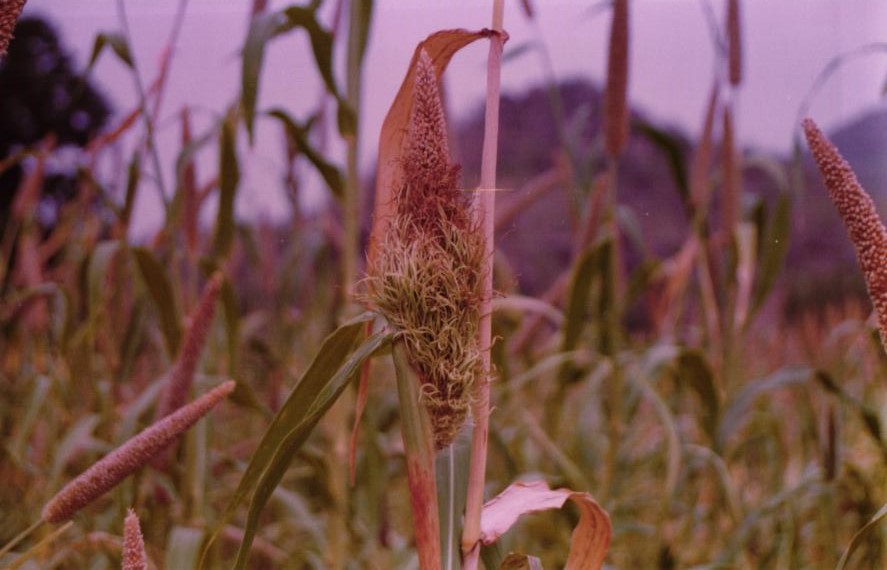
| Ingredients | Flour of pearl millet (Pennisetum typhoides), leaves of custard apple (Annona squamosa), jute bag, farm yard manure |
| Details Of Innovation | Aphids attack the standing crop, vegetable plants and vine. They damage leaves, flowers and stem of the plant and such the sap. They remain stuck to the plant, damage the crop . To solve the problem, twenty-kilogram flour of pearl millet (Pennisetum typhoides) and five kilogram leaves of custard apple (Annona squamosa) are mixed together and filled in the jute bag. Thereafter, this jute bag is buried in farm yard manure for 15 days and after 15 days,it is taken out and leaves of custard apple are separated from the flour of pearl millet. This flour is then broadcasted or spread with the help of water pump or cloth on the aphid-infestated crop. It is a traditional practice learnt by farmers from their forefathers. |
| Vocation | Farming |
| PAS 1 | "Plants can defend themselves against the attack of aphids by producing secondary metabolites that can be used to control these insects. Ricinuscommunis is an interesting plant species with documented insecticidal activity (Rana et al. 2012)." https://www.researchgate.net/publication/288446898_Ricinus_communis_L_-_A_review |
| PAS 2 | " Try spraying cold water on the leaves; sometimes all aphids need is a cool blast to dislodge them. Typically they are unable to find their way back to the same plant. • If you have a large aphid invasion, dust plants with flour. It constipates the pests. • Neem oil, insecticidal soaps, and horticultural oils are effective against aphids. Be sure to follow the application instructions provided on the packaging. • You can often get rid of aphids by wiping or spraying the leaves of the plant with a mild solution of water and a few drops of dish soap. Soapy water should be reapplied every 2-3 days for 2 weeks. • One variation of this soap-water mix includes cayenne pepper: Stir together 1 quart water, 1 tsp liquid dish soap, and a pinch of cayenne pepper. Do not dilute before spraying on plants. • Diatomaceous earth (DE) is a non-toxic, organic material that will kill aphids. Do not apply DE when plants are in bloom; it is harmful to pollinators, too" https://www.almanac.com/pest/aphids |

| PAS 3 | "The best way to control Aphids is to have lots of insectory plants (the Daisy and Carrot families are particularly good sources of food) around to feed their predators." https://www.smartgardener.com/plants/2565-cumin-cumin/pests/538-aphids |
| Practice ID | DTP0010000000977 |
| Annotation ID | GIAN/GAVL/166 |
| Reference | HBN database |
| Pest Group | Sap-sucking insects |
| Pest Scientific Names | (Aphidoidea spp.) |
| Technology Transfer Terms | DIY |
GIAN is the first incubator of grassroots innovations set up in 1997 in collaboration with the Gujarat government and supported by SRISTI and IIMA in addition to the Honey Bee Network.
Registration Nos. –
BPTA (Bombay Public trust Act), 1950 – F/ 5830 (Ahmedabad)
SRA (Societies Registration Act) , 1860 – GUJ/5981/Ahmedabad
FCRA (Foreign Contribution Regulation Act) – 041910244
Bungalow No 1, Satellite Complex, Mansi Cross Roads, Judges Bunglow Rd, Satellite, Ahmedabad, Gujarat -380015
GIAN ©All rights reserved.