|
PAS 1
|
"Adding organic material to the soil, crop rotation, constructing physical barriers, and encouraging predators, plant parts and plant extracts can be effective ways to control this insect." https://www.researchgate.net/publication/268153608_Farmer_Friendly_Ways_to_Control_Termites#fullTextFileContent")
|
|
PAS 2
|
"Using organic pest control methods can free the crops from the harmful effects of the chemical pesticides." http://agritech.tnau.ac.in/crop_protection/crop_prot_crop_insectpest%20_sugarcane_9.html
|
|
PAS 3
|
"To know more about the chemical, biological, cultural, and traditional ways to controltermites which affect most kinds of crops in India, check the link below." https://www.researchgate.net/publication/321475872_Termites_and_Indian_Agriculture#fullTextFileContent
|
|
PAS 4
|
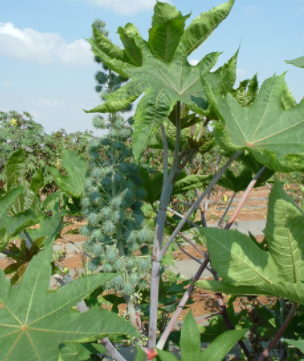
"Deep ploughing of nursery area during April-May will facilitate the exposure of pupae to high temperature and thus destroy them. Sowing of Castor around tobacco nursery 15 days before sowing of tobacco so that the castor puts up sufficient foliage by the time Spodoptera infestation builds up. The castor seedlings attract female moths of Spodoptera for egg laying. Leaves having egg masses and tiny caterpillars are clipped and destroyed. Four `litlure' pheromone traps are installed (loaded with 2.5 mg pheromone per vial) per acre two weeks after germination. If the catch of male Spodoptera moths is more than 5 per trap 1 % neem seed kernel suspension (NSKS) in water on 3 week old seedlings and 2% NSKS on 4 week old seedlings is to be sprayed. For preparing 10 litres of 1% NSKS 100 gm of neem seed kernel powder is taken and placed in a small muslin cloth bag. The bag is dipped in a bucket (or any vessel) containing 10 litres of water and the bag is squeezed for 15 minutes to obtain a light brownish liquid. This suspension can be directly sprayed on tobacco seedlings. For preparing 2% NSKS of 10 litres, 200 gm of neem seed kernel powder is to be taken and prepared as above. Spraying 50 litres of 1% NSKS on 3 week old seedlings and 60 litres of 2% NSKS on 4 week old seedlings or 1125 litres of nuclear polyhedrosis virus (NPV) solution prepared by 250 NPV infected larva by mixing with 250 g rice powder or starch powder during evening times or Bacillus thuringiensis var. kurstaki @ 1.0 kg in 1125 litres of water per hectare controls the pest. If the number of seedlings damaged by Spodoptera exceeds 6 per sq.m. area spraying any one of the following insecticides from 4 weeks onwards is recommended. Emamectin benzoate 5 SG @ 5 g in 10 litres of water Novaluron 10 EC @ 10 ml in 10 litres of water. During cyclonic weather, tobacco caterpillar, S. litura can also be controlled by putting jaggery and rice bran baits. This is prepared by dissolving 6.25 kg jaggery in 12.5 litres of water and adding to this emamectin benzoate 5 SG 200 ml. To this 25 kg rice bran is slowly added by mixing it thoroughly with a smooth stick so that the bait is made into small balls. The bait is broadcasted on the nursery beds during evening hours to effectively control the caterpillars. The other 3 species of caterpillars viz., (1) green caterpillar, L. exigua (2) green looper P. signata and (3) black caterpillar, A. ypsilon that sometimes infest the tobacco nurseries can also be controlled by spraying any one of the above insecticides." https://ctri.icar.gov.in/for_controlPests.php
|
|
PAS 5
|
"Castor oil plant: Botany,Ecology and uses" https://www.ijsr.net/archive/v3i5/MDIwMTMyMDY1.pdf
|
|
Agro Ecological Zone
|
Agro Ecological Sub Region (ICAR) Northern Plain (and Central Highlands) In (4.2), Agro-Climatic Zone (Planning Commission) Gujarat Plains and Hills Region (XIII), Agro Climatic Zone (NARP) North Gujarat zone (GJ-4)
|
|
Other Community Practices
|
"Pest Management Strategies in Traditional Agriculture: An African Perspective" https://www.annualreviews.org/doi/full/10.1146/annurev.ento.45.1.631#_i11
|
|
Practice ID
|
KNW0020000000369
|
|
Annotation ID
|
GIAN/GAVL/137
|
|
Reference
|
HBN database
|
|
Technology Transfer Terms
|
DIY
|