| Category | Crop Pest & Disease Management |
| Scout | HBN |
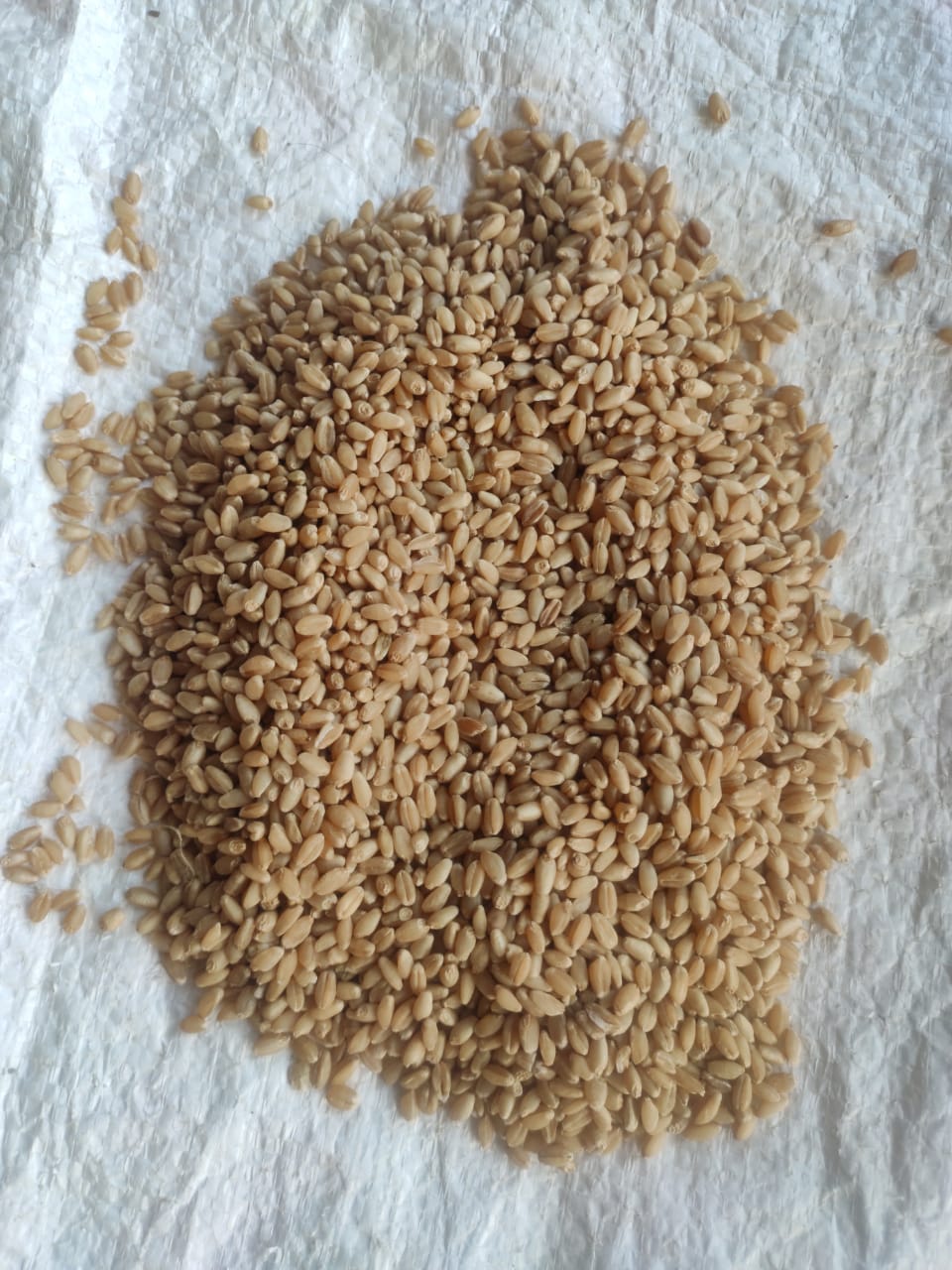
| Ingredients | Pits of depth 2-3 feet containing alternating layers of wheat husk. |
| Details Of Innovation | The storage of wheat in pits containing alternating layers of wheat husk is found to be effective in preserving wheat. |
| Innovator / Knowledge Provider | Dudhabhai Hajabhai Parmar |
| District | Kutch |
| KVK District | Krishi Vigyan Kendra, Vivekanand Research and Training Institute, Mundra, Kachchh |
| Address | Vill:Adesar Tal:Rapar |
| Languages Spoken | Gujarati |
| Vocation | Farming |
| State | Gujarat |
| PIN Code | 370155 |
| PAS 1 | "Essential oils and whole milk in the control of soybean powdery mildew - This research aimed to evaluate the potential of essential oils (EOs) and cow's whole milk (CWM) in order to control soybean powdery mildew and to estimate the most effective concentrations of these natural products in reducing the disease severity on soybean plants." https://www.scielo.br/scielo.php?script=sci_arttext&pid=S0103-84782013001100003 |
| PAS 2 | "Dual role of milk on aphid and powdery mildew control in kale - Powdery mildew (PM) is the most important kale disease and it is more difficult to manage when plantsare simultaneously infested with aphids. In this work, we aimed at evaluating the contribution of asulphur-based fungicide, water, or cow’s milk to control PM as well as the aphids Brevicoryne brassicaeand Myzus persicae on kale under greenhouse conditions. We also assessed in vitro the effect of theproducts mentioned on their selective action on growth of the entomopathogenic fungus and the aphids.Four week-old plants naturally infested with aphids and PM were evaluated for disease severity and aphidcounts. Plants were sprayed weekly with milk (10% v/v), sulphur (2 g/L), or water. From 7 to 28 days afterthe experiment onset (DAEO), plants were evaluated weekly for the disease severity, number of eachaphid species, and number of fungal-colonized dead aphids. Milk and fungicide sprayed on plants reduceddisease (30% and 10%, respectively) compared to the water control (P ≤ 0.001). In addition, B. brassicaepopulation was reduced for the milk but not for the fungicide treatment at 21 DAEO. Surprisingly, the deadaphids were parasitized by a fungus identified as Cladosporium cladosporioides. Moreover, milk treatmentdid not interfere with C. cladosporioides in vitro growth. On the contrary, sulphur, copper oxychloride, andazoxystrobin reduced fungal growth. Additionally, C. cladosporioides, milk, and milk + C. cladosporioidesreduced B. brassicae and M. persicae populations. A dual role of milk on both powdery mildew and aphidcontrol reinforces the usefulness of this product on glasshouse kale production." https://www.researchgate.net/publication/299423011_Dual_role_of_milk_on_aphid_and_powdery_mildew_control_in_kale |

| Agro Ecological Zone | Agro Ecological Sub Region (ICAR) Western Plain, Kachchh And Part Of Kathia (2.2, 2.4) ,Agro-Climatic Zone (Planning Commission) Gujarat Plains and Hills Region (XIII) , Agro Climatic Zone (NARP) North West Zone (GJ-5) |
| Practice ID | KNW0020000000351 |
| Annotation ID | GIAN/GAVL/122 |
| Reference | HBN database |
| Technology Transfer Terms | DIY |
GIAN is the first incubator of grassroots innovations set up in 1997 in collaboration with the Gujarat government and supported by SRISTI and IIMA in addition to the Honey Bee Network.
Registration Nos. –
BPTA (Bombay Public trust Act), 1950 – F/ 5830 (Ahmedabad)
SRA (Societies Registration Act) , 1860 – GUJ/5981/Ahmedabad
FCRA (Foreign Contribution Regulation Act) – 041910244
Bungalow No 1, Satellite Complex, Mansi Cross Roads, Judges Bunglow Rd, Satellite, Ahmedabad, Gujarat -380015
GIAN ©All rights reserved.