
Name and Address:
Khansoy Abdi Noor Ali
Box 245-70220, Wajir
Phone and E-mail:
Phone: +254711623386
Email: khansoyabdinoor@gmail.com
Brief background Information of Nominee including age, education and employment/profession associated etc.:
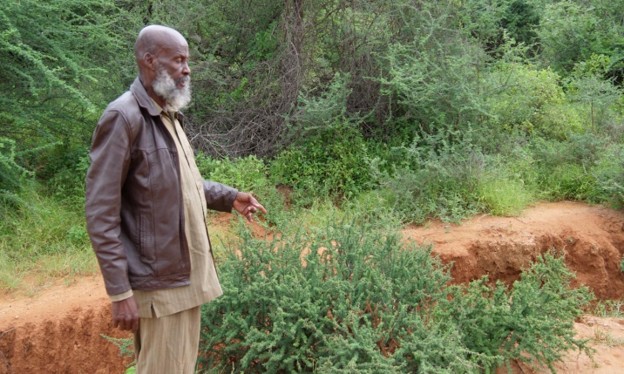
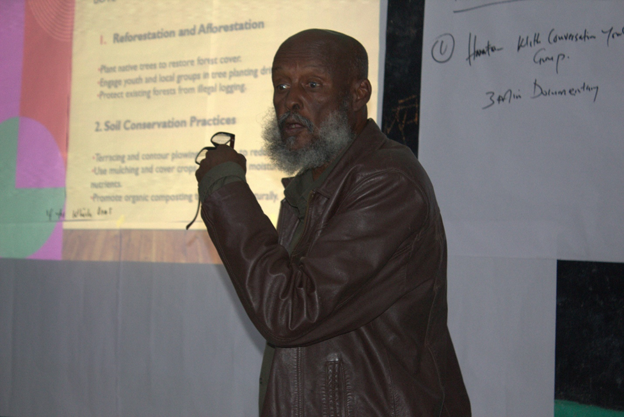
Khansoy Abdi Noor Ali- Passport Number- AK0178120 is a respected community elder, environmentalist, and educationist from Bute Ward in Wajir County, Northern Kenya. At 68 years old, Mzee Khansoy has dedicated over four decades to environmental conservation and sustainable rangeland management in the arid and semi-arid lands (ASALs) of Northern Kenya.
A passionate advocate for rangeland restoration, Khansoy strongly believes in the power of community-led initiatives to combat land degradation, desertification, and climate change impacts. His work emphasizes the integration of indigenous knowledge with modern conservation practices to restore degraded grazing lands and improve ecosystem health for future generations.
In 2025, he actively volunteered with the Ardha Jabesa Foundation (AJF) during the implementation of a UNCCD-funded community-led land restoration project. He played a key role in mobilizing community members, providing traditional ecological knowledge, and supporting practical restoration activities such as reseeding, soil conservation, and controlled grazing systems in Wajir County.
As a former educationist and lifelong community volunteer, Khansoy continues to inspire younger generations through mentorship, peacebuilding, and environmental awareness. He remains a strong voice for the rights of pastoralist communities and the sustainable management of Northern Kenya’s rangelands.
Challenges & Problems faced in Rangeland and Pastoralism in your area/region:
Northern Kenya’s rangelands, which form the backbone of pastoralist livelihoods in counties such as Isiolo, Marsabit, Samburu, Wajir and Garissa, are under severe pressure from climate change and recurrent droughts. The region experiences more frequent and intense dry spells, with droughts now occurring every few years instead of once a decade. This has led to widespread land degradation, reduced pasture availability, water scarcity and massive livestock losses. Overgrazing due to increasing livestock populations and shrinking grazing areas further accelerates desertification, soil erosion and the spread of invasive species, diminishing the productivity and resilience of these critical ecosystems.
Resource-based conflicts remain a major challenge, intensified by competition over scarce water and pasture, especially during droughts. Ethnic tensions, cattle rustling and disputes between pastoralists and other land users (such as farmers or conservancies) are common, often fueled by weak land governance, insecure tenure and the breakdown of traditional resource management systems. Land fragmentation through enclosures, large-scale investments and conversion of rangelands for agriculture or conservation restricts livestock mobility, a key adaptation strategy and undermines the cultural and economic foundations of pastoralism.
Socio-economic and infrastructural marginalization compounds these environmental and conflict-related issues. Pastoralist communities face limited access to markets, veterinary services, financial support, education and healthcare, perpetuating cycles of poverty and vulnerability. Policy gaps, weak integration of indigenous knowledge and inadequate investment in sustainable rangeland management hinder effective responses. These challenges threaten not only food security and biodiversity but also the cultural identity and resilience of Indigenous pastoralist and agro-pastoralist communities.
Addressing these interconnected problems requires strengthened community land rights, climate-smart restoration efforts, conflict resolution mechanisms and supportive policies that recognize the value of mobile pastoralism.
Describe Role and Achievements in Rangeland management/ restoration:
The narrative shall include local name and type of pastureland/grassland and its legal status, Area of Land Involved and location, Number of livestock/ animal population benefitted both wild and domesticated, Number of community members benefitted, rules in management of resources, any policy changes brought/achieved, Any other impact.
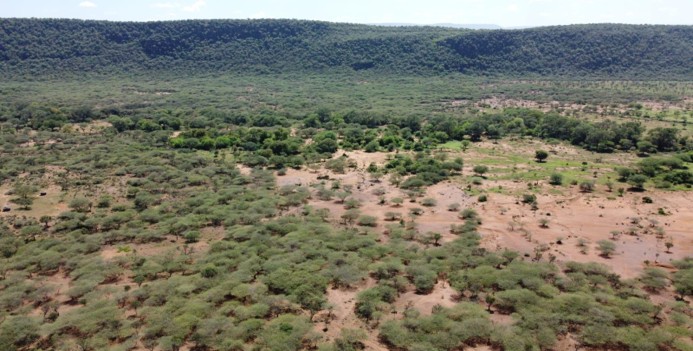
Ardha Jabesa Foundation (AJF), in partnership with myself Khansoy Abdi Noor Ali (Environmentalists) and Bute Ward Resource Management Committees in support from the UN Convention to Combat Desertification (UNCCD) under the G20 Global Land Initiative, successfully implemented a groundbreaking six-month Community-Led Land Restoration Project in Bute Ward, Wajir County, from June 2025 to May 2026. This initiative played a pivotal role in addressing severe land degradation in Northern Kenya’s arid and semi-arid rangelands. It empowered local pastoralist communities to restore degraded landscapes while strengthening climate resilience, livestock productivity and cultural heritage.
Local Pastureland Characteristics and Legal Status
The rangelands in Bute Ward are typical of Northern Kenya’s drylands, characterized by open savanna grasslands interspersed with shrubs and acacia woodlands. Local Borana and Somali pastoralist communities refer to key pasture types using indigenous names such as gamoji (open grasslands with annual and ephemeral grasses like mar badesa, kuraa, bila and dalat) and laf bona (areas with more perennial grasses such as Chloris species and Enteropogon macrostachyus). These provide vital forage for livestock, especially during wet seasons, while drought-resistant shrubs and trees offer browse during dry periods.
Legally, these are predominantly Community Land under Kenya’s Constitution 2010 (Article 63) and the Community Land Act 2016. The land is held collectively by pastoralist communities based on ethnicity, culture and customary use rights. The project strengthened community governance through Council of Elders and Community Land Management Committees (CLMCs), enhancing tenure security and reducing conflicts over resources. No formal privatization occurred, instead the focus remained on collective stewardship aligned with traditional pastoral mobility.
Scale, Location and Direct Beneficiaries
The project targeted and restored approximately 78,000 hectares of degraded rangelands in Bute Ward, located in Wajir North Sub-County, Northern Kenya. Bute Ward features semi-arid plains rising to about 460 meters, with low and erratic rainfall (300- 600 mm annually), making it highly vulnerable to desertification.
Beneficiaries included:
367 community members directly trained in sustainable land management practices, including women, youth, elders and pastoralists. However, the project also benefited thousands more indirectly through improved grazing access and resource sharing.
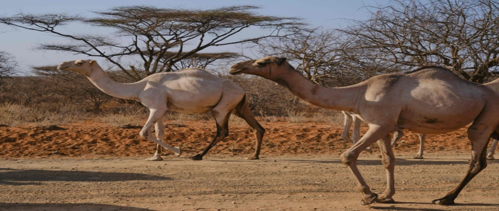
Livestock population- The restoration significantly benefited the ward’s large livestock herds (primarily camels, cattle, goats and sheep), which form the backbone of the local economy. While exact project-specific figures vary with seasonal movements, Bute Ward and surrounding areas support tens of thousands of animals. Improved pasture quality enhanced body condition, reduced mortality during droughts and supported wild animals sharing the ecosystem (e.g., antelopes, gazelles and other wildlife dependent on the same rangelands).
Management Rules, Policy Influence and Broader Impacts
The project introduced and reinforced community-led rules for resource management, including:
- Rotational and controlled grazing to prevent overgrazing.
- Indigenous reseeding with native drought-tolerant grasses.
- Water harvesting and soil conservation techniques.
- Community monitoring and enforcement through elders and CLMCs.
- Integration of traditional ecological knowledge with modern restoration methods.
These rules promoted sustainable use while respecting pastoral mobility. Policy and systemic changes achieved include strengthened recognition of community land governance under the Community Land Act. The project contributed to broader advocacy for rangeland-friendly policies, aligning with Kenya’s commitments to the UNCCD and the International Year of Rangelands and Pastoralists. It demonstrated a scalable model for community-driven restoration that influenced county-level planning in Wajir.
Other notable impacts:
- Enhanced food and water security through better livestock productivity and reduced drought vulnerability.
- Biodiversity conservation via improved vegetation cover and habitat restoration.
- Socio-economic benefits, including alternative livelihoods and women/youth empowerment.
- Strengthened cultural identity of pastoralist communities by validating indigenous knowledge.
- Long-term climate resilience, with restored lands better able to sequester carbon and combat desertification.
This community led initiative in Bute Ward stands as a successful example of community-driven rangeland restoration. It directly supports Kenya’s hosting of the 2026 Desertification and Drought Day under the theme “Rangelands: Recognize. Respect. Restore.” The project not only healed 78,000 hectares but also built lasting local capacity for ongoing stewardship.
Feedback from community members/public:
Community members have expressed strong appreciation for the project’s transformative impact. One elder, Abdishakur Bulle noted: “As an elder we are trying to see now things is coming back because we have protected our degrarded rangelands. there is a fair production that is going on by the people… the activity that is going on has enlightened the community. They owned that program.”
Another community member who is a rangeland management youth leader highlighted the shift in mindset: “We were just livestock keepers. After receiving this training and mindset building, we… do a paradigm shift from livestock to agriculture.”
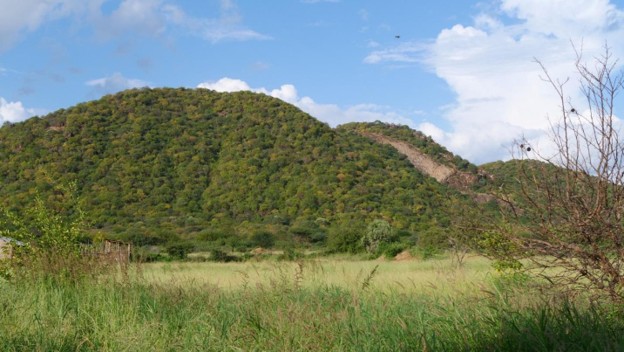
Residents also reported visible recovery: “The vegetation is 80% recovery… the mountain is also recovering very well.” They praised improved water access and livelihoods, with one stating that a previously dry water point is now full year-round, supporting domestic use, livestock and farming. Many credited AJF and partners for capacity building that empowered them to protect land from harmful exploitation and generate new income sources.
What are the future plans or opportunities for strengthening your work on rangeland restoration and pastoralism:
Building on my pivotal role in the successful 2025- 2026 UNCCD-funded Community-Led Land Restoration Project in Bute Ward, Wajir County, I plan to expand my efforts by establishing a community-based Rangeland Restoration and Pastoralism Resource Centre in Bute Ward. This centre will serve as a hub for training pastoralists in sustainable land management, combining indigenous knowledge with modern techniques such as advanced water harvesting, native grass reseeding and rotational grazing systems. My aim is to mentor at least 500 youth and women over the next three years, creating a new generation of environmental stewards while scaling restoration activities to an additional 50,000 hectares across Wajir North Sub-County. These plans will strengthen collaboration with Ardha Jabesa Foundation (AJF) to institutionalize community rules for resource management and enhance drought resilience for tens of thousands of livestock and community members.
Looking ahead, I have a strong opportunity to influence policy and attract larger partnerships by documenting and sharing the Bute Ward model at national and international forums, including future UNCCD Conferences of Parties and the ongoing International Year of Rangelands and Pastoralists. Potential collaborations with development partners, county governments and climate funds could support landscape-level restoration initiatives across Northern Kenya. My lifelong commitment positions me to advocate for stronger integration of pastoralist rights and indigenous knowledge in Kenya’s land and climate policies, ensuring the long-term sustainability of rangelands while securing my legacy as a champion of community-driven environmental conservation in the ASAL regions of Northern Kenya.
Photos:
Reference of two known person/ leaders / Government. officials who are familiar about your work and achievements.
1. Hon. Mohamed Halake: Climate Ambasador & Director Ardha Jabesa Foundation.
Contact: +254792920832
Email: halake3@gmail.com
2. Farah Kayareh: Local Government Chief
Contact: +254716831931