
Name and Address:
Saina Kutit
Olngosua Sinyati Grass Seed bank Group, Mbirikani, Kajiado County, Kenya
Phone and E-mail:
Phone: 0796323204/0722447944
E-mail: enairesiai@gmail.com
Brief background Information of Nominee including age, education and employment/profession associated etc.:
Ms. Saina Kutit is a 46-year-old Maasai pastoralist and community leader from Mbirikani Group Ranch in Kajiado County, Kenya. She is a founding member and current secretary of Olngosua Sinyati Grass Seed Bank Group. For over four years, she has actively promoted restoration of degraded rangelands through indigenous grass seed production and marketing, grass hay production and marketing, community awareness creation, and sustainable grazing management. Through her leadership, women in the group and in the neighbourhood, community have increased participation in restoration activities while improving household incomes from nature-based enterprises.
Challenges & Problems faced in Rangeland and Pastoralism in your area/region:
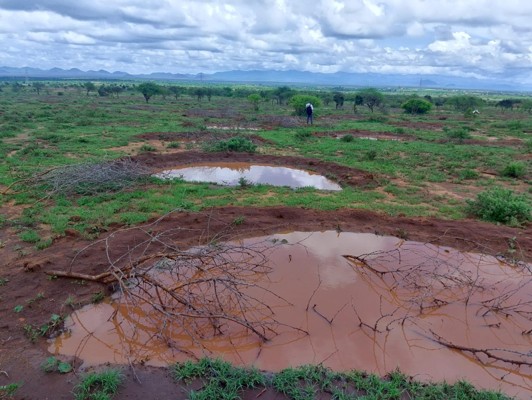
The rangelands of Mbirikani, more so the bigger Kajiado County have experienced severe degradation due to recurrent droughts, overgrazing, invasive species, declining grass cover, and climate change impacts. These challenges have resulted in reduced pasture availability, declining livestock productivity, increased conflicts over grazing resources, and reduced household incomes. Women and youth are disproportionately affected because they depend on livestock and natural resources for their livelihoods.
In addition, limited access to quality grass seed, weak market systems, and inadequate knowledge on restoration practices have slowed restoration efforts. The community has also faced challenges in mobilizing resources to rehabilitate degraded grazing lands.
Describe Role and Achievements in Rangeland management/ restoration:
The nominee has played a key role in restoring degraded rangelands in Mbirikani, Kajiado County, Kenya, through establishment and management of community-based Grass Seed Banks. The initiative supports restoration of degraded grazing lands while improving livelihoods of pastoralist households, particularly women.
The restoration activities are undertaken within the semi-arid Maasai rangelands of Mbirikani Group Ranch in the Chyulu Landscape. The land is community-owned grazing land managed under group ranch governance structures and local resource management committees.
Through grass seed production and reseeding efforts, degraded grazing areas have been rehabilitated using indigenous grass species adapted to local ecological conditions. The total area reseeded is 2,400 acres.
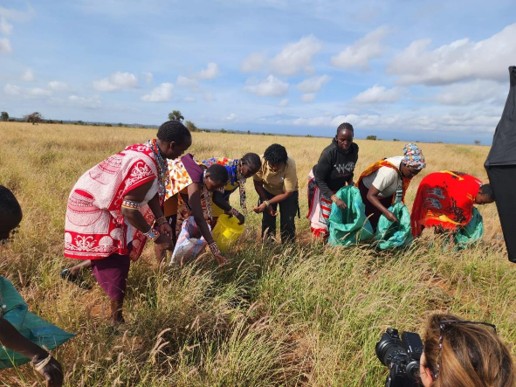
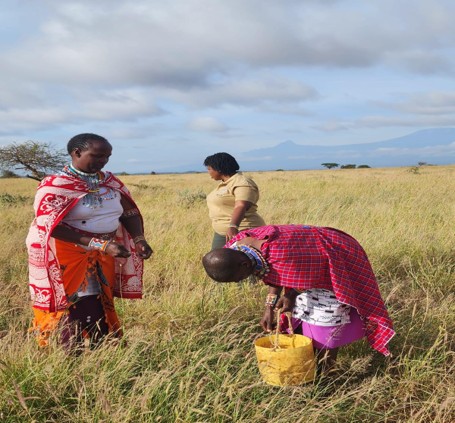
The nominee championed the Grass Seed Bank approach, where community members collect, process, store, and market indigenous grass seeds for restoration. This model combines ecosystem restoration with livelihood improvement, creating incentives for communities especially for women to actively participate in restoration activities.
Restored grazing areas have improved pasture availability for cattle, goats, and sheep owned by pastoralist households. Improved grass cover has enhanced forage quality, particularly during dry seasons, reducing livestock vulnerability to drought and livestock death.
More than 500 community members, particularly women, have directly benefited through participation in grass seed production, restoration activities, financial literacy training, business skills development, and savings initiatives. Indirect beneficiaries include pastoralist households that access restored grazing areas.
Under the nominee’s leadership, women have gained new opportunities to earn income through grass seed production, table banking, savings groups, and participation in restoration activities. Women have also strengthened their leadership capacities and decision-making roles within community institutions. The nominee has been involved as one of the training-for-trainers (TOTs) by facilitating trainings and mentorship sessions on grass seed bank production, rangeland restoration, financial literacy, record keeping and business development.
Restoration activities have increased vegetation cover, improved soil health, reduced erosion, enhanced ecosystem resilience, and contributed to biodiversity conservation by promoting indigenous grass species and improving habitat conditions for wildlife and livestock.
The group that Ms. Saina comes from, promotes sustainable grazing practices, community participation, collective decision-making, and protection of restoration sites from uncontrolled grazing during establishment periods.
The nominee’s work demonstrates how restoration can simultaneously improve ecosystem health, strengthen pastoral livelihoods, empower women, and build climate resilience. The approach has become a model for other communities interested in combining restoration with income generation.
Feedback from community members/public:
“Before joining the grass seed bank, we depended entirely on livestock. Today, I earn additional income from grass seed sales and can support my children’s education.” – Lucy Musa, Group Chairlady.
“The restoration work has improved grass availability in our grazing areas and reduced the distance we travel in search of pasture.” – Ole Sayiore, Grazing Committee member.
“Women now have a stronger voice in community development because of the opportunities created through the grass seed bank initiative.” – Olngosua Community Local Chief, Titus.
What are the future plans or opportunities for strengthening your work on rangeland restoration and pastoralism:
The nominee plans to:
- Expand grass seed production initiative to reach more degraded areas and to more women in the community
- Establish additional grass seed banks in neighbouring communities
- Increase women’s participation in restoration enterprises
- Strengthen market linkages for indigenous grass seed
- Promote climate-smart rangeland management practices
- Support youth engagement in restoration and conservation
- Scale up restoration efforts across the Chyulu Landscape and other pastoral areas
These efforts will contribute to long-term restoration of degraded rangelands while improving livelihoods and resilience among pastoralist communities.
Photos and Videos:
Reference of two known persons, leaders or government officials who are familiar about your work and achievements:
1. Project Officer from partner organization: Big Life Foundation, a partner organization of Conservation International – Esther Nairesiai,
Telephone: 0722447944,
Email: esther.nairesiai@biglife.org
2. Local Chief or Ward Administrator: Titus Olasarani;
Telephone: 0713319336