Name and Address:
Rajendra Singh Chundawat
Block Bhupalsagr, Distt. Chittaurgarh
Phone and E-mail:
Phone: 9785173422
Email: rajendras.chundawat@gmail.com
Background Information of person / organization:
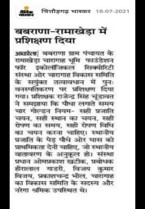
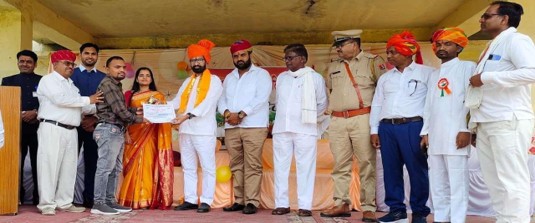
Rajendra Singh Chundawat is an 38 years ,social worker residing in Bhopalsagar Block of Chittorgarh District, which is located near Ramakheda village. He is a postgraduate and is widely recognized for his honesty, dedication, and commitment to community development. His primary objective is to mobilize and sensitize rural communities towards collective action and to help them access government programmes and welfare schemes for sustainable development. Rajendra strongly believes in strengthening local institutions and encouraging community participation for the protection of common resources and livelihood improvement. He has also been associated with the Block Office in the implementation and social audit processes of MGNREGA programmes, where he contributed towards promoting transparency, accountability, and community awareness. Due to his commitment towards community development he has been also nominated for block level appreciation awards.
Challenges & Problems faced in Rangeland and Pastoralism:
According to government records, the village has 175 acres of common pastureland, which serves as an important grazing resource for livestock-dependent families, especially poor households with little or no agricultural land. Over time, however, this pastureland came under serious threat due to illegal mining of white stone found in the area. Initially, only a few individuals were involved in extracting the stone, but gradually the activity expanded across a large part of the grazing land because of the high economic value of the stone.
The illegal mining created deep pits and severely damaged the natural environment of the pastureland. Since the area was commonly used for open grazing, livestock frequently fell into these pits, resulting in injuries and, in several cases, death. This created fear and distress among livestock owners, and many families gradually stopped open grazing in the area. The destruction of grazing land not only restricted the free movement of livestock but also posed a serious threat to the sustainability of livestock-based livelihoods in the village.
Role and Achievements in Rangeland management and related development:
The narrative shall include Type of land and legal status, Area of Land Involved and location, No. of livestock/ animal population benefitted Both wild and domesticated, Number of community members benefitted, Any policy changes brought/achieved, rules in management of resources, Any other impact.
Ramakheda is a revenue village located under Babrana Gram Panchayat in Chittorgarh District within Bhopalsagar Block. The village consists of 290 households with a total population of 1,281 people, including 632 men and 649 women. Agriculture and livestock rearing are the primary sources of livelihood for the community.
The village has nearly 1,250 livestock, including cows, buffaloes, sheep, goats, and oxen. A large number of families are engaged in animal husbandry activities such as milk production, goat rearing, and livestock trading. Milk is sold through dairy cooperatives as well as directly in nearby markets such as Bhopalsagar and Kapasan. However, livestock rearing in the village is largely dependent on farm produce and common grazing resources, making it economically challenging for many families. Due to limited livelihood opportunities, several households also depend on wage labor in nearby areas and under MGNREGA for their survival.
Concerned by the worsening situation and recognizing the need for collective action, Mr. Rajendra Singh Chundawat, a social worker from a nearby village, visited Ramakheda and discussed the issue with the community. He guided villagers on how the problem could be addressed collectively through existing institutional mechanisms and community participation.
Mr. Rajendra Singh encouraged the community to form a Charagah Vikas Samiti (Pastureland Development Committee) under Rule 170(1) of the Rajasthan Panchayati Raj Rules, 1996. With the consent and participation of the villagers, the Charagah Vikas Samiti was formally constituted on 6 December 2019.
Following its formation, the committee organized a village-level meeting to collectively discuss the issue of illegal mining and degradation of the pastureland. During the meeting, villagers openly shared their concerns regarding loss of grazing land, increasing encroachment, and the risks faced by livestock due to mining pits.
Under the guidance of Mr. Rajendra Singh, the community unanimously decided to take collective action to stop illegal mining and restore the damaged pastureland. The committee prepared a written application addressed to the Sarpanch, who also served as the Chairperson of the Wasteland and Pastureland Development Committee under the Gram Panchayat. The application, signed by community members, requested immediate action against illegal mining activities.
Responding to the concerns raised by the villagers, the Gram Panchayat formally submitted an application to the Sub-Divisional Officer (SDO) of Bhopalsagar. The application demanded removal of encroachments, immediate stoppage of illegal mining, confiscation of illegally extracted white stone, and legal action against those involved in the mining activities.
Following the complaint, the Tehsildar of Bhopalsagar conducted a field inspection of the site. Based on the findings, illegal mining activities were stopped by the administration. The illegally extracted stones, along with the machinery used for mining, were seized to prevent further damage to the pastureland.
Impact and Feedback:
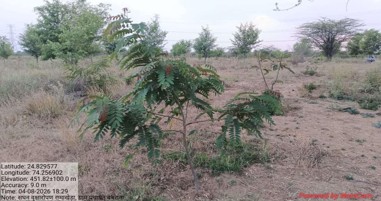
Community says our collective efforts, proper guidance, and timely support from the local administration resulted in significant positive changes. Illegal mining in the pastureland was successfully stopped, preventing further degradation of the common resource. The large pits created by mining activities were filled, improving both the safety and usability of the grazing land.
As a result, our livestock can now graze freely without the risk of falling into dangerous pits. The restoration and protection of the pastureland have improved grazing conditions and strengthened the livelihood security of livestock-dependent households in the village.
What are the future plans or opportunities for strengthening your work on rangeland restoration and pastoralism:
The community in guidance of Rajendra Chundawat developed restoration plan for half of the land for fodder production, water storage and other soil and moisture conservation activity and submitted to Gram Panchayat and will implement with support of panchayat.
Photos: