
Name and Address:
Mr. Trachung Palzang
Gascha Village, Maixi Township, Zoigê County, Ngawa Tibetan and Qiang Autonomous Prefecture, Sichuan Province, China.
Phone and E-mail:
Nominator contact: Huxuan Dai, +86 17745125293, huxuandai21@gmail.com
Background Information of person / organization:
Trachung Palzang, son of a herder, was born in a traditional black yak‑wool tent on the Zoige grasslands. He grew up among yaks and sheep, and like many pastoral children, he attended school away from his hometown. After graduation, he secured a stable job in a large city. In 2010, concerned about grassland degradation and the loss of traditional culture, he resigned from his urban job and returned to his hometown to work on sustainable development. He is a self‑taught practitioner and community organizer, combining traditional pastoral knowledge with modern ecological science.
Challenges & Problems faced in Rangeland and Pastoralism:
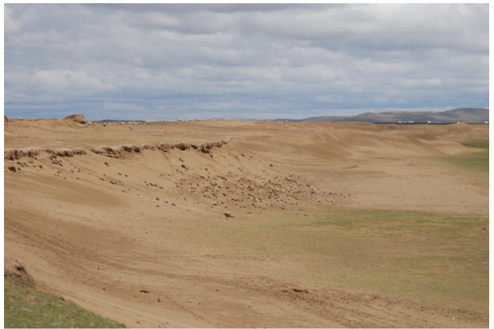
Severe grassland degradation, including desertification and “black soil patches” (bare, eroded areas).
Vulnerability of alpine grassland ecosystems to climate change and historical overgrazing.
Erosion of traditional pastoral culture and knowledge.
Outmigration of youth, leading to a lack of next‑generation grassland stewards.
Economic dependence on traditional grazing, making it difficult to balance conservation with livelihood stability.
Role and Achievements in Rangeland management and related development.
Role:
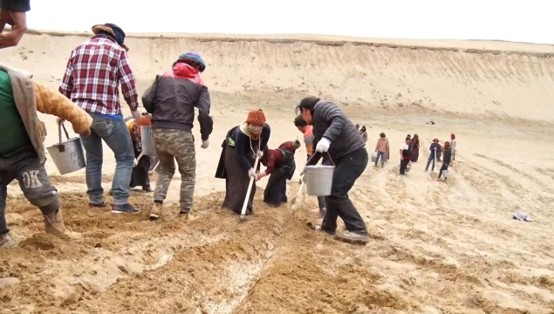
Since 2010, Trachung Palzang has led community‑based grassland restoration on the Zoige Plateau. He founded a grassland restoration cooperative (2013) and a herder photography group, mobilizing hundreds of herders to participate in ecological restoration and cultural inheritance. His approach integrates modern science with traditional knowledge, emphasizing low‑cost, low‑technology, locally adapted methods.
Achievements – including required details:
Local name and type of pastureland/grassland and its legal status:
Zoige alpine meadow and peat wetland (alpine grassland ecosystem). The land is collectively owned by the pastoral community under China’s rural land system, with grazing rights held by local herder households.
Area of land involved and location:
Cumulative restoration area: 14,000 mu (approx. 933 hectares).
Location: Zoige grassland, Ruoergai County, Sichuan Province, eastern Qinghai‑Tibetan Plateau.
Number of livestock/animal population benefitted (wild and domesticated):
Domesticated: Approximately 98,000 sheep units (livestock equivalent).
Wild species: Over 230 wildlife species have benefited from improved habitat, including black stork, black‑necked crane, wolf, Tibetan fox, Tibetan gazelle, and kiang (Tibetan wild ass).
Number of community members benefitted:
More than 280 households (over 1,200 people) directly benefited. Over 1,000 herders directly engaged in restoration and management activities.
Rules in management of resources:
Promotion of a “summer enclosure, winter grazing” system – restored areas are fenced in summer to allow seed maturation and dispersal; grazing is allowed only in winter after the ground freezes. Grazing intensity and timing are adaptively adjusted by herders based on local experience. A women’s handicraft group (producing yak wool products) provides alternative income, reducing grazing pressure.
Any policy changes brought/achieved:
While no formal policy change is documented, Palzang’s work has influenced the perspectives of researchers and government officials, and his community‑based model has been replicated by more than 10 other conservation organizations and pastoral communities across the region.
Impact:
Economic benefit: Cumulative economic benefit from grazing support exceeds RMB 38 million (approx. USD 5.2 million).
Knowledge diffusion: Over 30 environmental organizations and 25 research institutions have recognized his work; documentaries and technical manuals have reached over 63 million people.
Capacity building: Trained a team of 15 herder photographers who produce award‑winning documentaries (e.g., Herders and Black‑necked Cranes, The Wolf).
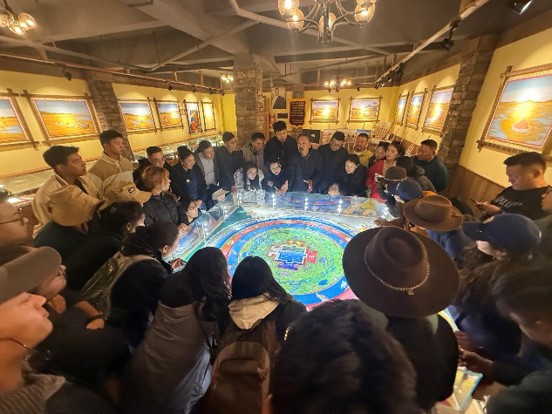
Cultural innovation: Used thangka paintings and mandalas as communication tools (“My thangka is my PowerPoint”). Produced Tibetan‑language videos and a small museum/library open to visitors.
Feedback:
As Palzang noted: “Many people used to think grassland restoration was something only experts could do. Now more and more herders believe that we ourselves can participate and do it well.”
Local herders who initially lacked confidence have become active participants. The success of early restoration trials mobilized not only relatives but also broader community members, and herders from other parts of the Qinghai‑Tibetan Plateau have begun learning and adopting the community‑based replanting model.
“In some villages, grass was planted in areas that were once entirely degraded, under Palzang’s leadership. At the time, the ground was so unstable that even motorcycles could not pass, as they would sink into it. After six to seven years, the landscape had transformed to the point where no visible traces of black-soil degradation remained. When grass planting first began, some people did not believe that vegetation could recover. But if asked today, that same person would only express admiration.”
- What are the future plans or opportunities for strengthening your work on rangeland restoration and pastoralism:
Further improve community‑centered grassland governance, strengthening ecological monitoring and adaptive management.
Expand environmental education, especially targeting school students and young people studying outside Zoige, to strengthen their connection with their homeland’s ecology and culture.
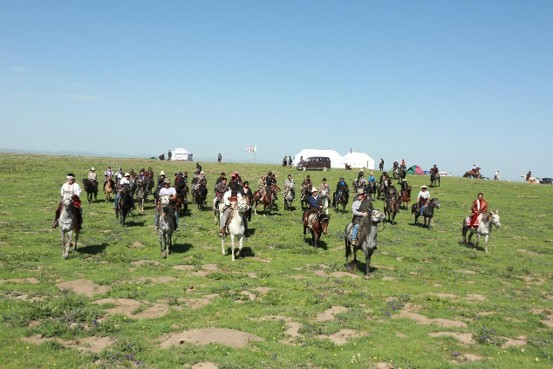
Continue the “Return Home” initiative (summer horseback journeys with elders) to engage youth and preserve traditional skills.
Scale up the herder photographer model and documentary production to share knowledge more widely.
Palzang emphasizes: “The future of the grassland is not the responsibility of one person, but of everyone who lives here. Among this, young people’s love for their homeland is especially important.” - Please add 4‑5 pictures and one video clip (2‑3 minutes) of your activities:
照片:
视频:
https://news.cgtn.com/news/2020-09-19/Herders-turn-desert-into-green-TUMEeaUZd6/index.html
https://weixin.qq.com/sph/A8TVuLcRQo
https://www.163.com/opencourse/detail/video-MD7EKI1NF-MF2FQ7V0F
10. Reference of two known persons/leaders/Government officials who are familiar about your work and achievements:
Yangjianglamao, Deputy County Governor of Maqin County, Golog Tibetan Autonomous Prefecture, Qinghai Province
Zhi Lü, Professor at the School of Life Sciences, Peking University; Executive Director of the Center for Nature Conservation and Social Development, Peking University; Founder of the Shan Shui Conservation Center; Advisor to the United Nations Decade on Ecosystem Restoration (2021–2030); Co-Chair of the second IPBES Global Assessment of Biodiversity and Ecosystem Services (ongoing).